





Binoculars for Aspiring Astronomers
For those new to the wonders of the night sky, binoculars offer an accessible and often superior starting point compared to telescopes. Their wide field
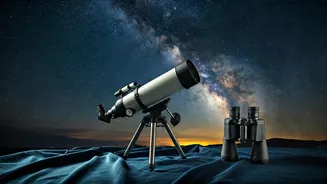
of view makes it easier to locate celestial objects like star clusters and the moon's craters. Magnification levels around 10x are generally recommended, providing enough detail without excessive shakiness. Models with objective lens diameters of 50mm or more can gather more light, resulting in brighter and clearer views, especially when observing fainter objects. Compact, image-stabilized binoculars can also be excellent choices for handheld viewing, minimizing blur and enhancing comfort during extended observation sessions. Investing in a sturdy tripod adapter can further improve stability for detailed lunar observation or tracking brighter deep-sky objects. Many binoculars designed for wildlife observation also perform admirably for astronomical purposes, making them a versatile addition to any budding astronomer's kit.
Choosing Your First Telescope
When you're ready to delve deeper into the cosmos, a telescope becomes an invaluable tool. For beginners, refractor telescopes are often a good choice due to their simplicity and low maintenance, providing crisp views of the moon and brighter planets. Newtonian reflector telescopes, on the other hand, typically offer more aperture for the price, allowing for observation of fainter deep-sky objects like nebulae and galaxies. Catadioptric telescopes, such as Schmidt-Cassegrains, combine elements of both refractors and reflectors, offering a compact design with long focal lengths. For younger enthusiasts, telescopes designed with user-friendliness in mind are crucial. Features like simple mounting systems and integrated smartphone adapters can make the learning process more engaging and less frustrating, allowing children to capture their own celestial images and share their discoveries with ease. Regardless of type, prioritize telescopes that are easy to set up and operate.
Essential Gear Protection
Protecting your valuable stargazing equipment is paramount, especially when venturing out to dark sky locations. Camera backpacks designed for outdoor use offer robust padding and customizable compartments to safeguard your telescope, camera bodies, lenses, and other delicate accessories from bumps and environmental elements. For travel, lightweight and compact tripods are indispensable; they provide a stable platform for your optics without adding significant bulk to your luggage. Ensure your tripod can comfortably support the weight of your chosen telescope or binoculars and offers smooth adjustments for tracking celestial objects. Consider backpacks with weather-resistant materials and ample space for personal items like water bottles and extra batteries. Keeping your gear secure and protected ensures it remains in optimal condition for countless nights of astronomical exploration.
Navigating the Night Sky
To truly make the most of your stargazing sessions, leveraging technology can significantly enhance your experience. Stargazing apps utilize augmented reality (AR) and vast databases of celestial objects to help you identify constellations, planets, and other phenomena in real-time. Simply point your smartphone towards the sky, and the app will overlay the names and positions of stars, nebulae, and galaxies. These applications often include detailed information about each object, its history, and its visibility, acting as a virtual guide. Many apps also offer sky maps that can be customized for your location and the current date, allowing you to plan your observations in advance. Some even provide alerts for upcoming astronomical events like meteor showers or planetary conjunctions, ensuring you never miss a spectacle. These digital tools transform a simple look at the stars into an interactive and educational adventure.