



The Blue Fire Phenomenon
Forget the conventional image of a volcano at night; Kawah Ijen presents a breathtakingly different display. Instead of the expected red glow, this Indonesian
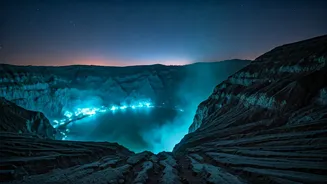
volcano erupts with an almost otherworldly electric blue luminescence after sunset. This captivating visual, often mistaken for flowing blue lava, is actually the result of a fascinating chemical reaction. Deep within the crater, fissures release substantial amounts of sulfurous gas, heated to extreme temperatures, often exceeding 600°C. When this superheated gas encounters the oxygen in the air, it ignites. The intense heat causes the sulfur to burn, producing flames that exhibit a distinct, vibrant blue hue. This striking coloration is particularly visible against the dark canvas of the night sky, creating streaks and trails that can appear to flow down the volcanic slopes, truly resembling molten blue rock and sparking comparisons to scenes from science fiction movies. The intensity of this display is so pronounced that it transforms the entire landscape into an alien environment once darkness falls.
Day vs. Night Contrast
The dramatic transformation of Kawah Ijen from day to night is one of its most surprising aspects. By daylight, the volcano crater appears relatively unassuming. The harsh sunlight dissipates the visibility of the blue flames, making them nearly imperceptible. The landscape itself seems more ordinary, characterized by rough, dusty terrain and the absence of any overt fiery activity. It is only with the arrival of dusk that the true magic unfolds. As the sun dips below the horizon, the crater begins to glow with an intense, electric blue. This stark contrast between the volcano's subdued daytime appearance and its dazzling nocturnal display is what makes Kawah Ijen a truly unique natural wonder. The transition from a seemingly mundane volcanic site to a scene straight out of a futuristic film highlights nature's capacity for dramatic and unexpected spectacles, leaving observers in awe of its hidden power and beauty.
Turquoise Lake and Miners
Beyond the captivating blue flames, Kawah Ijen harbors other remarkable features, most notably its striking turquoise crater lake. This vast body of water, nestled at the volcano's heart, possesses an almost ethereal beauty due to its vibrant color. However, its appearance is deceiving; the lake is highly acidic and intensely corrosive, posing significant dangers to anyone who ventures too close. Complementing this natural wonder is the presence of dedicated sulfur miners, who undertake incredibly arduous work within the crater daily. These individuals brave the toxic environment and challenging terrain to extract solid sulfur by hand. They meticulously break apart chunks of sulfur and then carry heavy loads back up the steep crater walls, often without the aid of any mechanical equipment. This raw, physically demanding labor in one of the planet's harshest environments creates a profound and unforgettable juxtaposition with the surreal blue flames.
Nature's Surprise and Resilience
The dual nature of Kawah Ijen—a place of breathtaking natural beauty and extreme human hardship—makes it an unforgettable destination. It challenges conventional perceptions of volcanoes, offering an electric blue spectacle instead of the familiar red lava. This phenomenon serves as a powerful reminder that the natural world often defies expectations, presenting wonders far beyond our imagination. The sight of the blue fire, coupled with the knowledge of the miners' unyielding labor in such a perilous setting, leaves a lasting impression. It highlights the astonishing diversity of Earth's landscapes and the incredible resilience of both nature and humanity. Kawah Ijen is a testament to the fact that true wonder can be found in the unexpected, in the unique ways natural processes unfold and in the indomitable spirit of those who work amidst such powerful environmental forces.