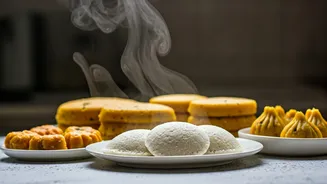

Idli: The Classic
Idli, a South Indian staple, is a light and fluffy steamed cake made from fermented rice and lentil batter. The fermentation process not only gives idli
its characteristic tang but also enhances its nutritional value, making it easily digestible. The batter is typically made by soaking rice and urad dal (black lentils) separately, grinding them into a smooth paste, and then allowing them to ferment overnight. This simple yet complex process results in a dish that's both healthy and delicious. Idli is usually served hot with sambar (a lentil-based vegetable stew) and coconut chutney, creating a balanced and flavorful meal perfect for breakfast or any time of day.
Dhokla: Gujarati Delight
Dhokla, a beloved Gujarati snack, is another steamed treat made from a fermented batter. While variations exist, the primary ingredient is usually a batter of fermented rice and chickpeas (besan). The batter is seasoned with spices like turmeric, ginger, and green chilies, then steamed until it becomes light and spongy. Once steamed, dhokla is often tempered with mustard seeds, curry leaves, and sometimes a little bit of asafoetida. This tempering enhances the flavor and adds a delightful aroma. Dhokla is enjoyed with chutneys, often a sweet and sour tamarind chutney or a spicy green chutney, making it a delicious and versatile dish.
Khaman: Savory Steamed
Similar to dhokla, Khaman is another popular Gujarati snack, also made from a fermented batter. The key difference lies in the ingredients: Khaman primarily uses besan (gram flour) as its base, resulting in a slightly different texture and flavor profile. Like dhokla, the batter is seasoned with spices and then steamed until it becomes light and airy. After steaming, Khaman is typically tempered with mustard seeds, curry leaves, and a sprinkle of coriander. It offers a savory and tangy taste, often eaten with green chilies and a variety of chutneys. Khaman is a perfect example of a quick, healthy, and flavorful breakfast option.
Modak: Sweet Celebration
Modak is a sweet dumpling particularly associated with the Hindu festival of Ganesh Chaturthi. These dumplings are made from a dough of rice flour or wheat flour and are typically steamed. The most common filling is a mixture of grated coconut and jaggery, creating a sweet and chewy center. Modak can also be deep-fried, but the steamed version is a lighter and healthier choice. The shape of Modak is often conical, and its presentation is as important as its taste, especially during festive times. Eating Modak is a way to celebrate and offer devotion during special occasions.
Puttu: Kerala's Pride
Puttu is a popular breakfast dish from Kerala, made from steamed cylinders of ground rice and coconut. The rice is layered with grated coconut in a cylindrical mould, which is then steamed until cooked through. Puttu often has a slightly coarse texture, which complements its simple flavors. It's usually served with kadala curry (black chickpea curry) or sweetened with sugar and ghee, offering a satisfying and filling meal. Puttu offers a taste of Kerala's culinary heritage, highlighting the use of local ingredients and traditional cooking methods. It's a quick and simple meal that's both healthy and delicious, enjoyed by many in South India.
Vada: Crispy & Soft
Vada, a savory fried fritter, also has a steamed version, which is a healthier alternative. The traditional vada is made from a batter of soaked and ground urad dal (black lentils), which is then deep-fried. The steamed version, however, avoids the frying, making it less oily. The batter is prepared and fermented in the same way, producing a fluffy and flavorful outcome. Steamed vada is typically served with sambar and chutney, delivering a complete and delicious breakfast. It’s a popular choice in South India, offering the same great taste with a healthier approach.
Idiyappam: String Hoppers
Idiyappam, also known as string hoppers, is a delicate breakfast dish made from rice flour. The rice flour dough is pressed into thin noodle-like strands, which are then steamed. These steamed strands create a light and airy texture. Idiyappam is served with various accompaniments, including vegetable curries, coconut milk, and sugar, providing many flavor possibilities. Its delicate taste makes it a delightful choice for a light yet satisfying breakfast. Idiyappam's simple ingredients and cooking process highlight the versatility of Indian breakfast options.
Momo: Himalayan Staple
Momo is a steamed dumpling, which has found a cherished place in India. These dumplings are originally from the Himalayan regions. They are typically filled with a mixture of meat or vegetables, seasoned with spices. The dough is folded and shaped, then steamed until cooked through. Momos are known for their juicy, flavorful fillings and the soft, tender dough. They are generally served with a spicy chutney, enhancing the already delicious taste. Momos offer a different flavor from other Indian breakfasts, demonstrating the influence of regional culinary traditions.
Uttapam: Savory Pancake
Uttapam is a South Indian pancake made from a fermented batter, similar to idli. The batter consists primarily of rice and urad dal, offering a slightly tangy flavor. While it can be fried, a healthier alternative is to steam it. Uttapam can be topped with various ingredients like onions, tomatoes, and chilies, creating a versatile and flavorful breakfast. Steaming ensures the nutrients are retained, creating a lighter option than fried variants. Uttapam provides a customizable and tasty meal, that's easy to make and adaptable to individual preferences.
Poha: Flattened Rice
Poha is a quick and easy breakfast dish made from flattened rice. Although poha is not strictly steamed but rather cooked with water, it can be a part of the 'steamed dishes' family, as a part of the preparation. The flattened rice is soaked in water to soften it, and then it is cooked with onions, potatoes, spices, and often a squeeze of lemon juice. The final dish has a soft, moist texture and a savory flavor. It's a popular choice in many parts of India, especially in Maharashtra, where it is often garnished with fresh coriander and served with a side of sev (crispy gram flour noodles). Poha is a quick, filling, and flavorful breakfast option.