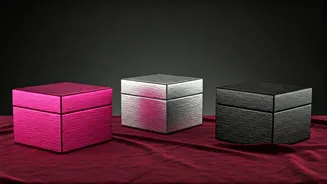







The Pink Box
Selecting the soft pink gift box suggests a core fear of being rejected or feeling unvalued by others. Individuals drawn to this choice often prioritize
harmony and are highly attuned to the needs of those around them, sometimes to their own detriment. They may find themselves apologizing unnecessarily or feeling they must constantly perform to maintain relationships. In a culture that encourages compromise, this can lead to a feeling of being stretched too thin. To counter this, it's vital to recognize that your worth is not dependent on external validation. Learning to set boundaries and say 'no' without guilt is crucial. Journaling unspoken feelings can provide an outlet and help you articulate needs you might otherwise suppress, fostering a healthier sense of self-appreciation.
The Metallic Box
A preference for the sleek, metallic gift box points towards an underlying fear of losing control or not meeting expectations. Those who gravitate towards this option often exhibit a high degree of competence and organization, meticulously planning for the future and maintaining a structured environment. This drive for excellence, while highly effective in achieving goals, can also stem from a deep-seated anxiety about things spiraling out of control. The constant pressure to perform and maintain this polished exterior can prevent true relaxation. Embracing 'progress over perfection' is a key takeaway. Practicing delegation, even for small tasks, can help loosen the grip of perfectionism and demonstrate that relinquishing some control doesn't lead to catastrophe.
The Black Box
Choosing the mysterious black gift box indicates a deep-seated fear of uncertainty and unexpected instability. Individuals attracted to this option value security and predictability above all else, often maintaining a small, trusted circle and meticulously preparing for potential disruptions. Their greatest anxiety lies in encountering unforeseen circumstances or sudden changes that disrupt their carefully constructed sense of order. While this preparedness makes them exceptionally capable in times of crisis, it can also foster feelings of isolation or rigidity. To mitigate this, establishing a 'worry window'—a designated time each day to acknowledge fears before moving on—can be beneficial. This practice helps to contain anxieties and reminds that uncertainty, while daunting, is also a fertile ground for new experiences and growth.