
Cooling's Critical Role
Data centers are the nerve centers of the digital world, hosting vast amounts of information and processing colossal quantities of data. These facilities
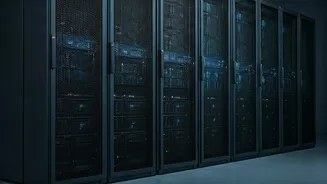
generate significant heat, and without effective cooling systems, the hardware would quickly overheat and fail. The constant operation of servers, networking equipment, and storage devices produces an enormous thermal load. Maintaining optimal temperatures is vital not just for the smooth functioning of the equipment but also for preventing data loss and ensuring overall operational reliability. Therefore, efficient and dependable cooling solutions are not merely beneficial; they are fundamental to the operation of any data center. Without proper cooling, the digital infrastructure that underpins everything from online banking to global communication would crumble.
Innovation in Cooling
The demand for more energy-efficient and cost-effective cooling systems is constantly growing. Traditional air-cooling methods, while common, can be expensive and less efficient in large-scale data centers. Companies are investing in alternative approaches such as liquid cooling systems to enhance cooling efficiency. Liquid cooling involves circulating a coolant directly around or through heat-generating components to absorb and dissipate heat more effectively than air. Companies are developing innovative immersion cooling technologies where servers are submerged in specialized dielectric liquids. Iceotope is one of the companies which claims that its technology can cut the cost of cooling by up to 80%. This suggests a significant shift in data center design and operation.
Cost-Cutting Potential
The potential to reduce cooling costs is a significant incentive for data center operators. Cooling can account for a considerable portion of a data center's operational expenses. Improving cooling efficiency not only leads to immediate cost savings but also contributes to better overall sustainability. By reducing energy consumption, data centers can decrease their carbon footprint and align themselves with environmental objectives. Efficient cooling systems also enable a higher density of IT equipment, meaning more computing power can be accommodated within the same physical space. This translates into increased operational capabilities without a corresponding increase in infrastructure costs, enhancing the overall efficiency and profitability of data center operations.
Understanding the Technologies
Several technologies are being developed to enhance cooling efficiency in data centers. Liquid cooling is a key advancement, offering significant advantages over traditional air-cooling. In liquid cooling, the coolant absorbs heat more efficiently than air and removes it from the components. Immersion cooling is another approach that involves submerging IT hardware in specialized dielectric fluids. These fluids have a high heat capacity, which enables the equipment to operate at lower temperatures and with greater stability. The development and deployment of these systems require specialized infrastructure and expertise. They also require careful planning and integration to ensure the safety and operational efficiency of the data center. Understanding these technologies is fundamental for data center operators looking to optimize their facilities.
Yulin Wang's Warnings
Yulin Wang has also brought up safety concerns regarding some cooling chemicals. This highlights the importance of not only efficiency but also the safety and sustainability of the cooling solutions utilized. Cooling fluids must be non-toxic and environmentally friendly to prevent any risks. This aspect highlights the significance of selecting cooling technologies that are safe for both employees and the environment. This includes careful handling and disposal of chemicals and the selection of materials that do not pose any hazards. The shift toward more advanced cooling solutions must always consider safety, and environmental responsibility, alongside performance and cost-effectiveness.