




Return to Launchpad
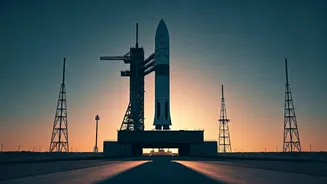
After a temporary return to the Vehicle Assembly Building (VAB), the powerful Space Launch System (SLS) rocket and its Orion spacecraft, designated for
the Artemis 2 mission, have successfully rejoined Launch Complex 39B. This relocation, initially scheduled for earlier in the day, experienced a delay of nearly four and a half hours due to adverse high wind conditions before the massive mobile launch platform finally reached its destination approximately 11 hours after departing the VAB. This return signifies a critical juncture in the mission's preparation, following a previous rollout on January 17th that included vital fueling tests known as wet dress rehearsals. The decision to bring the rocket back was prompted by the discovery of a blockage in the helium system of the rocket's upper stage, necessitating further engineering scrutiny and adjustments to ensure optimal performance for the upcoming launch window.
Technical Hurdles Overcome
Engineers meticulously investigated the helium system issue, pinpointing a dislodged seal within a quick-disconnect line responsible for supplying helium to the upper stage. This detailed analysis led to the necessary repairs, culminating in a flight readiness review on March 12th where NASA greenlit the vehicle's return to the pad. The agency has opted not to conduct another full wet dress rehearsal or fueling test, expressing confidence that the seal-related issues, which previously caused hydrogen leaks during an early February test, have been definitively resolved. Lori Glaze, acting associate administrator for exploration systems development, emphasized a desire to tank the vehicle only when a launch is truly imminent, stating, "From my perspective, when we tank the vehicle the very next time, I would like it to be on a day we could actually launch." This strategic approach aims to maximize efficiency and readiness for the Artemis 2 mission's critical objectives.
Launch Window Details
NASA has confirmed a prime launch opportunity for Artemis 2, with a two-hour window opening on April 1st at 6:24 p.m. Eastern time. This initial six-day period, running until April 6th, offers multiple launch attempts, though operational constraints limit the agency to four specific attempts within that timeframe. Following this initial window, the next available launch opportunity is slated for April 30th, with further details on extended opportunities into May to be disclosed by NASA. These precise timings underscore the meticulous planning involved in orchestrating such a complex deep space mission, ensuring all technical and logistical elements are aligned for a successful ascent towards the Moon.
Artemis Program Evolution
As preparations for Artemis 2 intensify, NASA is simultaneously refining later stages of its ambitious lunar exploration program. A significant announcement on February 27th revealed the addition of a new SLS/Orion mission scheduled for 2027. This mission will focus on testing operational procedures with lunar landers currently under development by industry partners, paving the way for the first crewed lunar landings targeted for early 2028 on Artemis 4 and a subsequent landing in late 2028 on Artemis 5. In a strategic shift, NASA has decided against developing its own Exploration Upper Stage for future SLS launches, opting instead to procure and adapt Centaur upper stages from United Launch Alliance for the Artemis 4 and 5 missions. These programmatic adjustments highlight NASA's adaptive strategy to achieve its long-term lunar objectives efficiently.
International Collaboration & Industry Briefings
Further insights into NASA's evolving Artemis plans are anticipated at upcoming international and industry gatherings. Josef Aschbacher, director general of the European Space Agency (ESA), confirmed that NASA has extended an invitation to the international community for updates in Washington D.C. in the coming week. "ESA will be present, and we really look forward to the updates from NASA on what their plans are within the Artemis context," he stated, underscoring the global interest in the program. Concurrently, industry stakeholders involved in exploration endeavors will convene for the annual Artemis Suppliers Conference, scheduled from March 23rd to 25th in Washington D.C. This confluence of events signals a period of significant information sharing and strategic alignment for the future of lunar exploration.