






Beyond the Flame
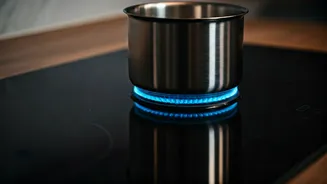
Transitioning to an induction cooktop means leaving behind the familiar visual cues of a gas flame. Unlike gas stoves where flame size directly indicates
heat, induction relies on numerical or digital settings that might initially feel abstract. The key is to shift your focus from the burner to the food itself. Learn to 'listen' to your cooking: the subtle sizzle of oil, the aroma of spices, or the sound of ingredients meeting the heat become your new indicators of temperature. Consistent practice with these abstract settings will soon translate into an intuitive understanding of your cooktop's capabilities, making heat management a natural part of your culinary process.
Embrace the Quiet
One of the most striking differences when moving to induction is the near silence of operation. Gas burners produce a distinct audible hum from the flame, and even electric coils can emit a soft hiss or buzz. Induction cooktops, by contrast, operate with minimal noise, which can sometimes lead beginners to question if the appliance is even on. While generally quiet, some magnetic cookware might produce a faint humming or buzzing sound, particularly at higher heat settings. This is a normal consequence of the electromagnetic interaction. If this subtle noise occurs, a slight reduction in the heat level often resolves it, allowing for a tranquil cooking environment.
Swift Heat Dynamics
Induction technology offers unparalleled responsiveness, with heat adjustments occurring almost instantaneously. Unlike traditional gas or electric stoves that require time for heat to build or dissipate, induction responds to setting changes in mere seconds. This means a vigorous boil can be reduced to a gentle simmer with immediate effect. However, this rapid response can catch new users by surprise, leading to faster-than-expected cooking and potential scorching if not managed carefully. Starting with moderate heat settings and gradually increasing them as needed is a prudent approach. As you gain experience, you'll master the art of precisely controlling this swift temperature modulation.
Cookware Compatibility
The efficiency of induction cooking is intrinsically linked to magnetism, meaning not all cookware is suitable. For a pan to heat on an induction surface, it must possess a magnetic base. Many stainless steel, cast-iron, and enamel-coated steel pots and pans are excellent choices. However, lightweight materials like aluminum, glass, and ceramic typically won't work unless they've been augmented with a magnetic layer. Heavier-gauge cookware generally performs better, providing more even heat distribution and stable temperature responses. Additionally, ensuring the pan's base diameter closely matches the size of the induction zone enhances heat transfer efficiency.
Prepare for Speed
Induction cooking's rapid pace necessitates a slight adjustment in your preparation habits. Unlike slower cooking methods where you might have time to chop vegetables or measure ingredients mid-cook, induction demands efficiency. Preheating an empty pan, especially on high settings, can quickly lead to burnt food due to the swift heat build-up. It's crucial to have all your ingredients prepped and ready to go *before* you turn on the cooktop. Starting with a lower heat setting and gradually increasing it, and avoiding the temptation to walk away while the pan preheats, are vital practices. Mastering these simple organizational shifts will make your induction cooking experience smooth and enjoyable.