





Glass Shower Doors
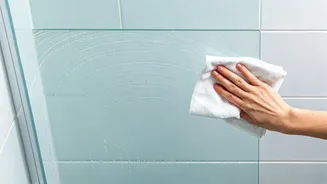
Glass shower doors are notorious for showcasing soap scum due to their transparent nature. To combat this, a cleaning expert recommends either a thick
paste made from 1 cup of baking soda, 1/4 cup of dish soap, and 1/4 cup of water, or a spray solution consisting of 2 tablespoons each of dish soap and washing soda, plus 10 drops of tea tree oil and 1 tablespoon of rubbing alcohol. Allow either mixture to dwell on the surface for 10 to 15 minutes. Afterward, gently scrub in a circular motion, rinse thoroughly with warm water, and finish by drying with a towel or a squeegee. The efficacy of these solutions lies in baking soda's mild lifting properties, dish soap's ability to cut through grease and buildup, washing soda's saponifying action on fats, and alcohol's streak-prevention capabilities, which work together to break down and remove stubborn residue.
Tile and Grout
Soap scum can deeply penetrate the porous surfaces of grout and textured tiles, areas where water often accumulates. The suggested remedy involves a paste created from baking soda and three percent hydrogen peroxide. Apply this mixture liberally, allow it to effervesce for a few minutes, and then use a soft-bristled brush or an old toothbrush to scrub the affected areas. A thorough rinse will complete the process. The combination of hydrogen peroxide and baking soda creates a reaction that effectively lifts away grime and brightens grout. The baking soda provides a gentle abrasive action, while the hydrogen peroxide offers additional benefits by helping to eliminate mold. For mineral deposit issues, a 1:1 dilution of water with either vinegar or lemon juice can be effective, but caution is advised against frequent application as it may degrade grout over time.
Bathtubs Shine
Bathtubs often accumulate soap scum, particularly around the waterline and the bottom, where bath products and water interact. A straightforward solution involves using a simple baking soda paste. Apply the paste and then scrub gently with a non-scratch sponge or a melamine foam pad, often referred to as a magic eraser. A thorough rinsing will remove the loosened scum. For ongoing maintenance and to prevent future buildup, regular weekly wipe-downs using just dish soap and water are highly effective and recommended by cleaning professionals.
Fixtures and Drains
The intricate areas around drains, faucets, and hardware are prime spots for accumulating a mix of soap scum, hair, and general grime. To reach these tight corners, a baking soda paste used with a toothbrush is an excellent tool for getting into small crevices. For tougher buildup, combining baking soda with three percent hydrogen peroxide creates a potent bubbling action that not only loosens stubborn residue but also serves to deodorize the area. This dual-action approach tackles both the visible grime and any associated odors effectively.
Natural Stone Care
When cleaning natural stone surfaces like marble or granite, a delicate approach is crucial to prevent dulling, scratching, or even cracking the material. Begin with the mildest option: a mixture of castile soap or dish soap and water, applied with a soft sponge or cloth. After cleaning, rinse thoroughly and dry the surface completely. For sealed stone, a teaspoon of washing soda can be added to the soap and water mixture to boost its degreasing power. However, if the stone is soft, such as marble, or if you are unsure whether it is sealed, it is best to omit the washing soda. A simple water test can determine if sealing is necessary; if water beads up, the seal is intact, but if it darkens the stone or soaks in, resealing is recommended.