





The Viral Phenomenon
Hypnotic videos of molten glass being shaped into intricate designs have captured the internet's attention, particularly on platforms like Reddit. These
clips, reminiscent of the satisfying soap-cutting videos that went viral, tap into a similar visual appeal. However, behind the mesmerizing spectacle, significant engineering challenges are being overcome, transforming this artistic display into a field ripe with practical possibilities. Companies are actively working to bridge the gap between laboratory curiosities and real-world products, moving beyond mere viral content to functional innovations.
Temperature Breakthroughs
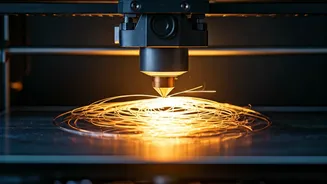
A pivotal shift in glass 3D printing is driven by revolutionary temperature control methods. Traditionally, glass fabrication demands extreme furnace heat, far exceeding the melting point of common metals. However, recent advancements, including sol-gel processes developed at institutions like Hebrew University and MIT, have dramatically lowered the required temperature to a mere 250°C. This is akin to the heat needed for baking, making the process more manageable. Concurrently, technologies like Direct Glass Laser Deposition utilize lasers to precisely heat only the specific points where glass filaments fuse, reaching up to 2200°C locally. This targeted heating eliminates the need for massive, energy-intensive furnaces, effectively democratizing glass manufacturing and moving it closer to desktop applications.
Custom Eyewear Emerge
The creation of custom eyeglasses stands out as a prime example of glass 3D printing's immediate impact. Companies are now leveraging advanced facial scanning technology to precisely map individual facial geometries. This data is then used to print frames featuring intricate internal channels and complex curves that are virtually impossible to achieve with traditional injection molding techniques. The resulting eyewear is notably lightweight, challenging preconceived notions about the bulkiness of glass-based accessories. Furthermore, this ability to manipulate glass at a microstructural level opens doors to novel optical innovations. Researchers are exploring how to integrate prescription lens capabilities directly with frame optics, promising enhanced visual correction and a new era of personalized vision solutions.
DIY Potential Dawns
While the prospect of widespread DIY glass 3D printing is exciting, it's still some time away. Current methods necessitate specialized glass filaments and rigorous temperature regulation, placing them beyond the reach of most hobbyists and home workshops. However, the trajectory mirrors the evolution of early desktop 3D printing, which also started as expensive lab equipment before becoming accessible. Promising research, such as MIT's work with recycled glass materials, suggests that the development of more sustainable and cost-effective feedstocks could accelerate the technology's democratization. Although a precise timeline for consumer availability remains uncertain, the existing viral interest indicates a strong market demand, hinting that these captivating videos could eventually inspire weekend projects.