






The Mighty Indian Gaur
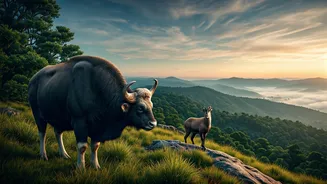
Often referred to as the Indian bison, the Indian Gaur stands as the largest wild bovine species on Earth, currently classified as vulnerable. These imposing
yet gentle creatures are frequently observed indulging in grazing across the lush forest clearings and expansive grasslands that dot the Nilgiri region. Their presence is a significant indicator of a healthy ecosystem, and spotting one amidst the natural beauty of the Nilgiris is a truly memorable experience. The Gaur's robust build and majestic horns are a testament to its wild heritage, making it a symbol of the untamed spirit of these hills. Conservation efforts are vital to ensure the continued existence of these magnificent animals in their natural habitat.
Elusive Indian Pangolin
The Indian Pangolin holds the unfortunate distinction of being one of the most heavily trafficked mammals globally. Its secretive nature, primarily nocturnal and solitary, makes it a rare sight for even the most seasoned wildlife enthusiasts. Covered from head to tail in protective keratin scales, this insectivorous marvel navigates the forest floor in search of ants and termites. The severe threats posed by illegal wildlife trade continue to push this unique creature towards greater vulnerability. Efforts to combat poaching and protect its natural environment are paramount for the survival of the Indian Pangolin, a creature unlike any other on the planet.
Majestic Lion-Tailed Macaque
Easily recognizable by its striking silver-white mane and strikingly expressive facial features, the Lion-Tailed Macaque is a primate that thrives within the dense canopy of the rainforest. This species exhibits a profound dependence on undisturbed forest ecosystems, and unfortunately, its populations are continually diminishing due to the relentless fragmentation of its natural habitat. The loss of contiguous forest cover directly impacts their ability to forage, breed, and find shelter, making them particularly susceptible to environmental changes. Protecting the remaining rainforests of the Nilgiris is crucial for the future of these charismatic monkeys, whose lives are intrinsically linked to the health of their arboreal home.
Rare Nilgiri Laughingthrush
Known locally as the Nilgiri Sholakili, this endangered bird species is endemic to the unique shola forests found in the Western Ghats. Its extremely limited geographical range, coupled with the ongoing pressures of habitat degradation, makes conservation initiatives within the Nilgiri region absolutely critical for its very survival. The specialized environment of the shola forests, characterized by patches of dense evergreen forest interspersed with grasslands, provides the specific conditions this bird needs to thrive. Without dedicated protection and restoration of these delicate ecosystems, the future of the Nilgiri Laughingthrush remains precarious, underscoring the importance of preserving these unique montane habitats.
Stealthy Nilgiri Marten
Representing India's sole marten species, the Nilgiri Marten is a carnivore renowned for its elusive nature and infrequent sightings. This agile mammal inhabits the deep, dense evergreen forests of the region and plays a vital role in maintaining the delicate ecological balance of its environment. Its predatory activities help regulate populations of smaller animals, contributing to the overall health and stability of the forest ecosystem. The secretive habits of the Nilgiri Marten mean that much remains to be understood about its specific behaviors and ecological needs, making its continued presence a sign of a thriving and undisturbed forest.
Iconic Nilgiri Tahr
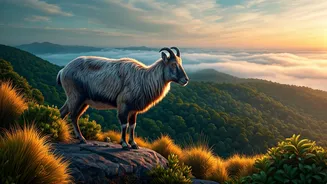
The Nilgiri Tahr, an endangered mountain ungulate, is exclusively found in the high-altitude grasslands that characterize the Western Ghats. This remarkable species is readily identified by its distinctively curved horns and its extraordinary ability to effortlessly navigate treacherous, steep cliff faces. It stands as a significant flagship species for the Nilgiri landscape, symbolizing the unique biodiversity and ecological value of this mountain range. The Tahr's adaptation to its challenging environment makes it a symbol of resilience, and its conservation is paramount to preserving the natural heritage of the Nilgiris and its surrounding alpine meadows.