





Budget's Primary Focus
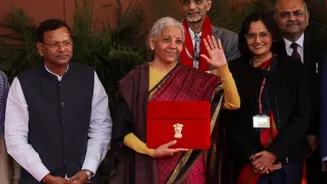
Budget 2026, presented by Finance Minister Nirmala Sitharaman, spotlighted three main 'Kartavya' agendas designed to propel India's growth trajectory.
These included an emphasis on infrastructure enhancement, a significant push for healthcare advancements, and robust backing for Micro, Small, and Medium Enterprises (MSMEs). The budget also underscored the government's commitment to addressing inflation, with expectations that inflation will remain at 2.6% for FY26. Furthermore, it outlined a clear roadmap, featuring the development of rare earth corridors to boost the economy, and the expansion of the 'Lakpati Didi' scheme. A strong emphasis was placed on high-speed rail corridors and freight corridors, in addition to waterways development, signifying an all-encompassing strategy for sustained economic expansion and citizen empowerment.
Taxation and Finance
The Budget 2026 brought forth considerable changes in direct taxes and the rules surrounding Tax Deducted at Source (TDS), though there were no adjustments made to the income tax slabs. The budget included a foreign asset disclosure scheme, providing a 6-month window for smaller taxpayers to come forward. A noteworthy announcement was the waiving of import duties on 17 medicines, offering relief to cancer patients. The Securities Transaction Tax (STT) was also modified, which, according to market analysts, is likely to affect high-frequency traders. The budget also addressed the banking sector's future direction, with FM Sitharaman indicating the steps and reforms to boost the financial framework of the country. This included significant reforms to the Goods and Services Tax (GST) that resulted in changes to the prices of various goods, including cars and medical insurance.
Infrastructure Initiatives
Budget 2026 revealed several significant infrastructure projects. Key among these was the announcement of seven high-speed rail corridors, alongside the development of freight corridors and waterways, designed to modernize transportation networks. There was a considerable push for the growth of the tourism sector. A central element of this was the proposal for five regional Ayush hubs to enhance medical tourism. Another strategic move was the creation of rare earth corridors, a pivotal step intended to fuel India's chip manufacturing capabilities. These initiatives highlight the government’s commitment to improving infrastructure and strengthening key sectors for long-term growth. Such investments are geared towards creating jobs and fostering an environment conducive to both domestic and international investments in India.
Sector-Specific Allocations
Several sectors benefitted from dedicated allocations and policy changes. The healthcare sector received considerable attention, including plans for NIMHANS 2.0 and a push for skilling healthcare professionals. The 'Lakpati Didi' scheme was expanded, aiming to empower women across India. Additionally, MSMEs received significant backing in the form of risk capital support. The focus on skills, scale, and AI was also underscored, alongside the announcement of girls' hostels in every district and the establishment of university townships, showcasing a multi-pronged approach to development. These allocations are crafted to promote inclusive growth and address specific sector needs, ensuring comprehensive development across various demographics and industries. The budget reflected a long-term vision of strengthening key sectors for a robust and resilient economy.
Economic Projections and Outlook
India's Real GDP is expected to grow at 6.8% in FY26, according to the budget's economic forecasts. The budget projected that inflation is estimated to be at 2.6% during the same fiscal year. The RBI Governor Sanjay Malhotra discussed the macroeconomic fundamentals, asserting that they are very strong. FM Sitharaman also mentioned that the GST 2.0 benefits were reaching the 'aam aadmi'. The government has shown a commitment to maintaining economic stability and boosting growth. These projections, coupled with the ongoing reforms, reflect the government's aim to navigate global economic challenges and foster a positive economic environment. The forecasts highlight the government's confidence in its economic policies and its plans to address challenges related to growth and inflation effectively.