
Makeup’s Historical Roots
Makeup's story spans millennia, evolving with cultures and societal norms. Ancient Egyptians, for instance, were pioneers, using kohl to line their eyes
and protect them from the sun, and red ochre on their lips and cheeks. This practice wasn't just for aesthetics; it held symbolic meaning, signifying status and religious beliefs. Moving through time, ancient Greeks and Romans continued the tradition, albeit with different materials and styles. They used white lead for a pale complexion, a look considered fashionable, and rouge to enhance the cheeks. The Renaissance saw a resurgence in makeup, particularly in Europe, where cosmetics were associated with wealth and social standing. The use of pigments, creams, and powders became more sophisticated, with formulas often guarded as closely held secrets. In contrast, the Victorian era brought about a shift, with makeup usage discouraged among the middle and upper classes, as it was associated with actresses and the less respectable. However, during the early 20th century, makeup began to re-emerge, driven by the rise of Hollywood and the film industry. Actresses adopted glamorous looks, making cosmetics more accessible and acceptable for wider use. Today, makeup has diversified into a global phenomenon, with countless brands and products, from everyday essentials to high-fashion creations, allowing individuals to express themselves and experiment with their appearance.
Essential Makeup Techniques
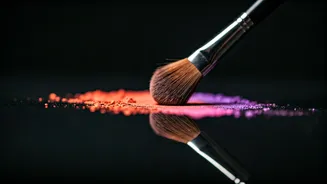
Mastering makeup requires understanding several core techniques. Foundation, the base for any look, should be chosen to match skin tone precisely, creating a smooth and even complexion. Application methods vary; some prefer brushes for coverage, while others opt for sponges to blend seamlessly. Concealer, used to cover imperfections, works best when applied after foundation and blended carefully. Correct placement is vital, typically under the eyes and on blemishes. Contouring and highlighting, techniques to sculpt and define the face, use darker shades to create shadows and lighter shades to bring areas forward. Contouring is typically applied along the hairline, under the cheekbones, and along the jawline. Highlighting, on the other hand, is placed on the high points of the face, like the cheekbones and brow bone. Eye makeup offers a world of possibilities. Eyeshadow, applied to the eyelids, can range from natural tones to bold colours, with techniques like blending essential for a flawless finish. Eyeliner, used to define the eyes, comes in various forms and techniques, like the classic wing. Mascara, applied to the eyelashes, adds volume and length, with formulas including waterproof and volumizing. Eyebrow shaping and filling contribute significantly to the overall look; gels and pencils are used to define and fill in the brows. Finally, lip colour completes the look, with a spectrum of shades and formulas to choose from. Correct application with a lip liner can further enhance shape and longevity.
Makeup for Confidence
Beyond aesthetics, makeup provides a powerful boost to self-confidence. The act of applying makeup, regardless of the complexity, can be a form of self-care. Choosing products and creating a look can be a creative outlet, allowing individuals to explore their style and express themselves. Makeup gives a sense of control over one's appearance, and can be a transformative experience. For many, makeup is a tool to address insecurities. By concealing blemishes, highlighting features, or simply creating a polished look, it can help manage self-consciousness and boost feelings of self-worth. Experimenting with various looks allows people to find their personal style. This journey of self-discovery extends beyond appearance, as confidence in one's look can translate into other areas of life. A person's body language is changed because of improved self-perception. Furthermore, the feedback and compliments people receive when wearing makeup can reinforce positive self-image, making them feel good about themselves. Embracing makeup as a tool for empowerment helps individuals project a more positive and confident image to the world.