






The Illusion of Freshness
After enjoying a delicious home-cooked meal, the lingering aroma can quickly turn from pleasant to problematic. Many reach for air fresheners, sprays,
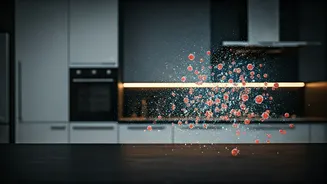
or scented candles as a quick fix. However, these products primarily operate on a principle of masking, akin to playing hide-and-seek with your senses. Instead of tackling the actual odor-causing molecules that emanate from your cooking, they flood your olfactory senses with artificial fragrances like lavender or linen. This approach doesn't neutralize or remove the offending smells; it merely introduces a competing scent. Research highlighted in the "Findings and Recommendations from the Joint NIST – AGA Workshop on Odor Masking" report clarifies that this is a purely sensory phenomenon. The masking agents don't chemically interact with or break down the molecules responsible for unpleasant smells. Instead, they influence the nerves in your nose to reduce your perception of the original, undesirable scent. This creates a deceptive sense of cleanliness, while the underlying odor molecules remain present.
Hidden Dangers of Masking
The practice of masking odors, while seemingly convenient, carries significant hidden dangers by interfering with a crucial human sense. Our sense of smell serves as an early warning system, alerting us to potential hazards like gas leaks or spoiled food. By overlaying unpleasant odors with artificial scents, we suppress this vital alert mechanism. The NIST workshop report explicitly warns that this can foster a false sense of security. Imagine being unable to detect the acrid smell of a fire or the distinct odor of a chemical spill because it's buried under a mountain of artificial citrus or floral notes. Beyond safety concerns, many aerosol air fresheners and sprays contain Volatile Organic Compounds (VOCs). When used in poorly ventilated spaces, these chemicals can permeate your entire home, introducing a cocktail of synthetic compounds into your living environment. True deodorization, as defined by scientific consensus, only occurs when odorant molecules are physically or chemically eliminated from the air, a feat that simple scented candles cannot achieve.
Science of True Odor Removal
Moving beyond the deceptive world of masking, the key to a genuinely fresh environment lies in the actual removal or neutralization of odor molecules. Understanding the science behind kitchen odors is paramount. These smells are often produced by volatile chemical compounds such as amines, which are responsible for fishy odors, and fatty acids, contributing to rancidity. Research in fields like Advances in Food and Nutrition suggest we should approach home freshness with the mindset of food scientists. Lingering off-odors frequently result from complex and stubborn interactions between proteins and flavor compounds. To combat these effectively, one must employ agents that actively adsorb or degrade these molecules, rather than merely covering them. This involves utilizing physical "scavengers" that chemically bind to and remove odor molecules from the air. Materials like baking soda and activated charcoal are excellent examples of such agents. For organic residues in areas like drains or on sponges, enzymatic cleaners offer a superior solution. These bio-based cleaners work by breaking down the organic matter that fuels odor-causing bacteria, thereby preventing odors at their source, leading to a truly clean and odor-free atmosphere.