







Ancient Wisdom & Modern Myths
Delve into the fascinating history of childbirth, revealing that ancient medical practices were surprisingly advanced. For instance, ancient Egyptians
used a pregnancy test involving barley and wheat seeds, which modern research confirms could work about 70% of the time due to pregnancy hormones accelerating germination. Contrasting this historical sophistication, the narrative shifts to contemporary experiences. While modern women often strive for agency, the illusion of complete control is challenged by the aggregation of sensitive reproductive data into large datasets, often linked to personal information. This data collection, driven by AI and policy, raises concerns about privacy and the potential for misuse. The lesson learned from this historical and modern juxtaposition is that progress in women’s autonomy is often a slow, uneven process, marked by both advancements and setbacks. The overarching sentiment is that continuous effort is required to ensure continued forward momentum, emphasizing the ongoing struggle for true control and recognition in reproductive health, a journey that echoes through generations.
Female Body's Evolutionary Role
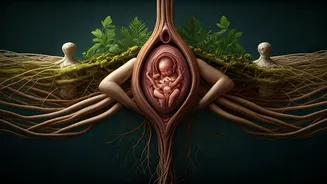
Explore the profound, yet often overlooked, role of the female body in human evolution, as detailed in research that highlights its neglect in scientific discourse. Despite a lengthy gestation period compared to other mammals, women's biological contributions have frequently been relegated to a secondary status, akin to a mere 'background factory.' This perspective minimizes the female body as the pivotal point, or 'fulcrum,' of evolutionary development. Consequently, centuries of medical research have failed to adequately incorporate how distinct sexual biology impacts health outcomes, including symptom presentation, treatment efficacy, pain perception, and immune responses. This oversight has led to compromised women's health at every level of the research pipeline, leaving significant gaps in fundamental knowledge across numerous conditions. The lack of thorough research means that women are often underserved by the medical community, with basic understanding missing on how female bodies process medications differently. This deficiency is critical, considering that these are the very bodies responsible for sustaining the species, making it imperative for research to prioritize understanding and addressing the unique biological needs of women.
Urbanization & Reproduction
Discover how the growth of cities, a cornerstone of human civilization, is intrinsically linked to reproduction, yet this fundamental aspect is frequently absent from discussions on urban development. When the expansion and functioning of urban environments are analyzed, the focus typically falls on infrastructure, housing, food supply, and water management. However, the essential process of human reproduction, which directly dictates population growth and thereby shapes urban dynamics, is rarely considered. This omission is a significant indicator of how the narrative of the female body has been marginalized, failing to be recognized as an integral part of the broader human story. Understanding this connection is vital because the story of the female body is deeply interwoven with the story of humanity itself, and it necessitates thorough study and acknowledgment. Therefore, advocating for dedicated research into women's health is crucial. Prioritizing attention and resources towards ensuring women's well-being, making pregnancy and childbirth safer and more comfortable, would benefit not only women but all of society.