




Endurance Passes Space Gauntlet
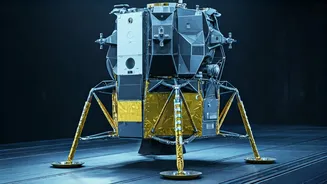
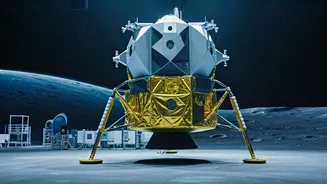
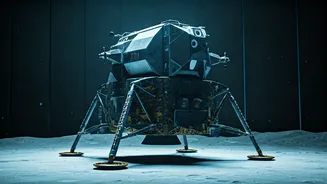
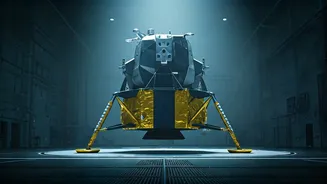
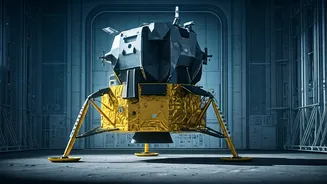
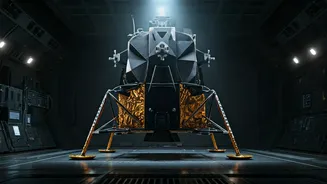
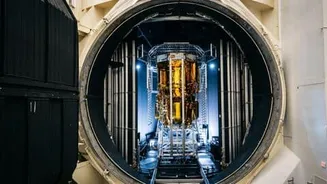
Blue Origin's "Endurance" lunar lander, also identified as Blue Moon Mark 1 (MK1), has successfully completed a crucial environmental testing phase. This
intensive evaluation took place within a specialized vacuum chamber at NASA's Johnson Space Center, specifically Thermal Vacuum Chamber A, a facility renowned for its scale and capability. The objective of this rigorous testing was to meticulously replicate the extreme conditions encountered during a journey to the Moon, including the frigid temperatures and near-vacuum of space. Engineers meticulously simulated these lunar transit environments to verify the lander's structural integrity, the effectiveness of its thermal control systems, and its overall operational readiness for a mission beyond Earth's atmosphere. This collaborative effort, operating under a Space Act Agreement between NASA and Blue Origin, represents a significant stride in preparing for future lunar endeavors.
MK1's Cargo Mission
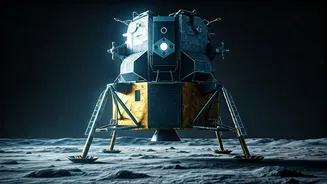
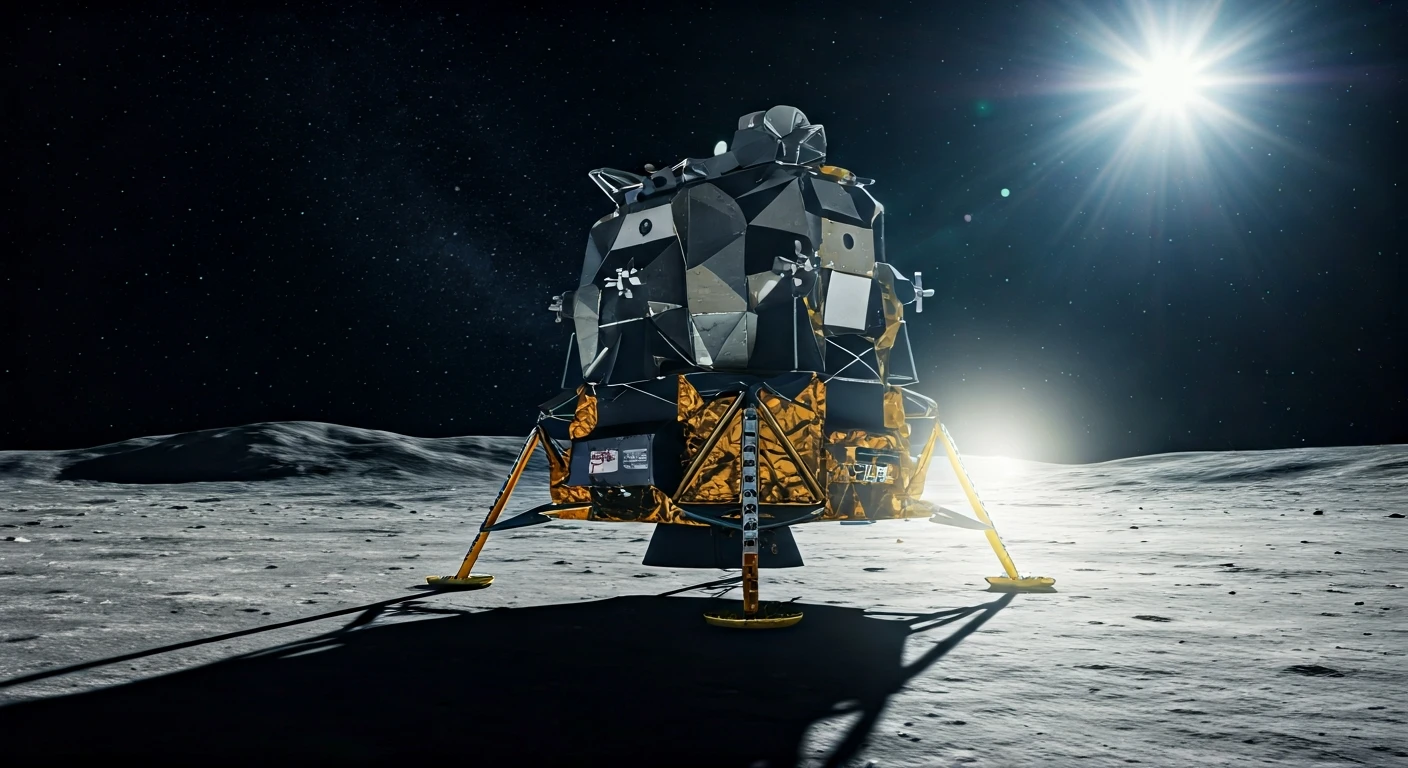
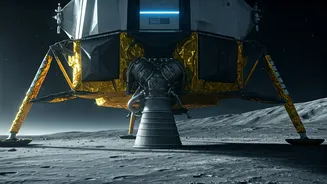
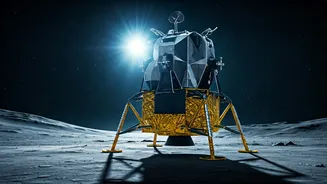
The "Endurance" lander, or MK1, is an uncrewed vehicle designed specifically for transporting vital cargo and equipment to the lunar surface. This mission is an integral component of the broader Artemis program's ambitious objectives, which aim to re-establish a human presence on the Moon. The MK1's primary role is to validate essential capabilities required for a successful lunar landing. These capabilities include demonstrating precise landing techniques, effectively utilizing cryogenic propellant systems, and autonomously managing guidance, navigation, and control functions. The chosen landing site is the Moon's south pole, an area of significant scientific interest due to its potential for water ice, a resource crucial for sustaining future lunar bases and exploration activities. Beyond its own operational experiments, MK1 will also carry scientific payloads.
Scientific Payloads Aboard
During its mission, the "Endurance" lander (MK1) will deploy and operate specific scientific instruments to gather valuable data from the lunar environment. One such instrument is the Stereo Cameras for Lunar Plume-Surface Studies (SLPS), which comprises advanced cameras designed to meticulously document the intricate interactions between the lander's engine plume and the lunar regolith during the critical landing phase. Understanding these interactions is vital for refining landing procedures and minimizing surface disturbance. Additionally, the lander will carry a Laser Retroreflector Array (LRA). This passive instrument will serve as a precise target for laser measurements from Earth-based observatories, enabling highly accurate tracking of the lander's position and contributing to lunar mapping and geodetic studies. These payloads underscore the mission's dual purpose of technological demonstration and scientific investigation.
Foundation for Future Missions
While the MK1 is an uncrewed cargo mission, its significance extends far beyond its immediate objective. The technologies and operational insights gained from its development, testing, and eventual mission will directly inform the creation of Blue Origin's next-generation lander, the Mark 2 (MK2). This advanced lander is being engineered to be crew-capable, facilitating the transport of astronauts between lunar orbit and the surface. The rigorous validation of systems like propulsion, navigation, and environmental controls on the MK1 will inherently enhance the safety, reliability, and overall effectiveness of the MK2. Consequently, the success of "Endurance" is a crucial stepping stone, building the foundational knowledge and technological confidence necessary for the ambitious goal of sustained human exploration and habitation on the Moon.