




Colossal Ancestors Roamed
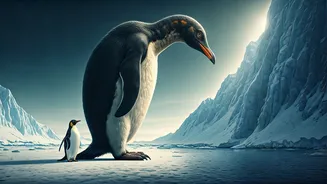
While we often picture the Emperor Penguin as the largest, it pales in comparison to their ancient relatives. Evidence from fossils unearthed in New Zealand
points to a species known as Kumimanu biceae, which stood an astonishing 5 feet 11 inches tall and tipped the scales at over 100 kg. These were true giants of the avian world, vastly different from the smaller penguins we recognize today. This discovery significantly broadens our understanding of penguin evolution, showcasing a lineage that once commanded immense size and presence on prehistoric landscapes, long before the familiar forms we know began to dominate.
Internal Salt Filtration
Surviving in a saltwater environment without a freshwater source is a challenge, but penguins have a brilliant biological solution. They possess a specialized supraorbital gland situated just above their eyes, functioning as a highly effective natural desalination system. This gland meticulously filters excess salt directly from their bloodstream. The resulting concentrated saline solution is then expelled, not through drinking, but through a unique 'salt sneeze' from their beaks, effectively managing their hydration and preventing internal systems from succumbing to salt overload. It's a sophisticated physiological adaptation crucial for their marine existence.
Physics of the Waddle
The seemingly awkward gait of a penguin, often perceived as clumsy, is in fact a marvel of biomechanical efficiency. This distinctive side-to-side sway, or waddle, is not a sign of poor coordination but a deliberate energy-saving technique. By rocking from one leg to the other, penguins create a pendulum-like motion. This action stores kinetic energy at the end of each step, which is then cleverly utilized to propel them forward into the next stride. For birds with short legs and significant body fat, this method of locomotion is the most economical way to traverse icy terrain, minimizing energy expenditure and conserving vital calories.
Pebble-Based Economy
For species like the Gentoo and Adélie penguins, the seemingly simple act of collecting pebbles forms the basis of a complex social and mating ritual. With nesting sites on the ground being limited and vulnerable to the freezing temperatures, smooth stones are crucial for creating a stable, elevated platform for eggs. This necessity has given rise to a unique 'pebble economy.' Males diligently search for the most attractive stones to present as a courtship offering to females. This system, however, also fuels a lively 'criminal underworld,' as opportunistic bachelors often seize moments of inattention to pilfer desirable pebbles from established nests, highlighting the high stakes of nest building.
Camouflage for Survival
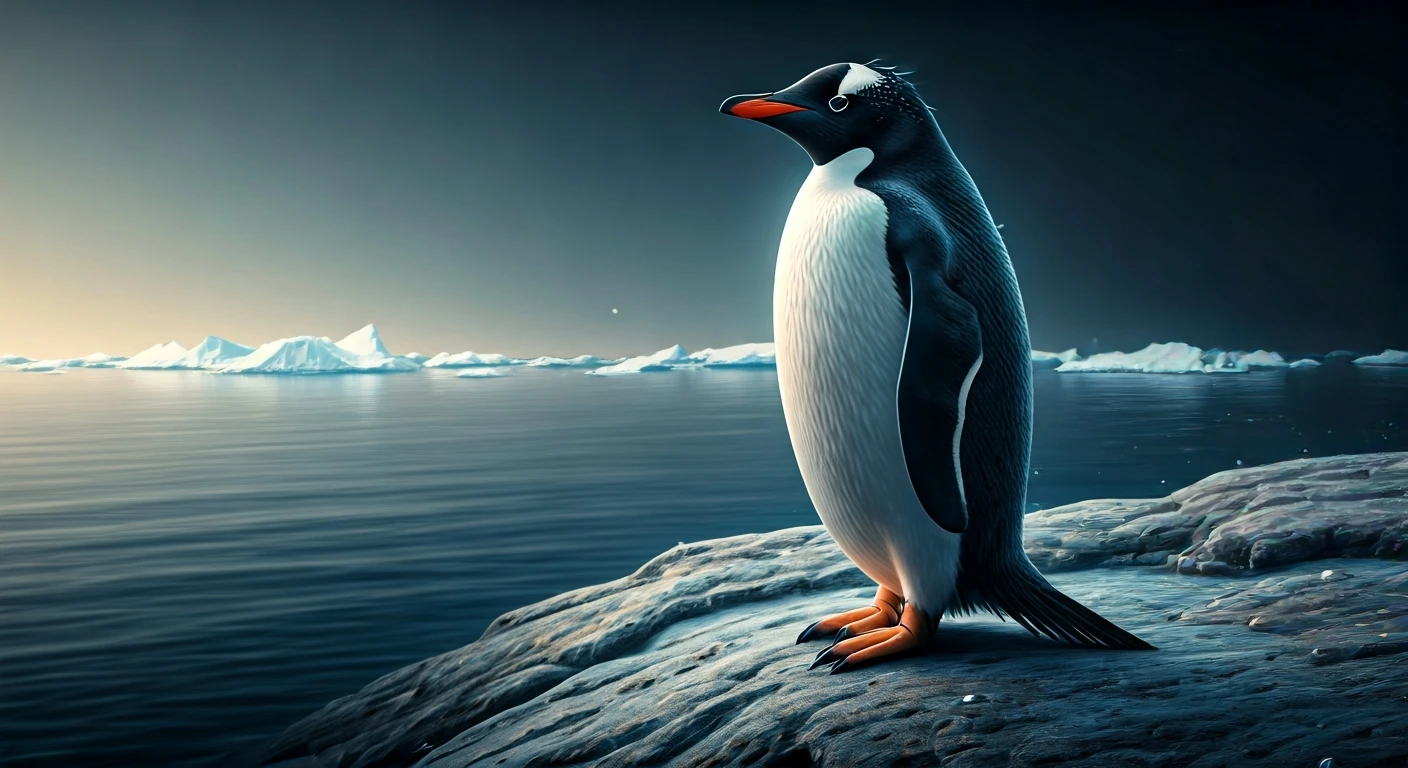
The iconic black and white plumage of penguins is far more than a fashion statement; it's a vital survival mechanism known as countershading. This coloration provides exceptional camouflage in their aquatic environment. When viewed from below by predators like leopard seals in darker waters, their white undersides blend seamlessly with the bright surface of the ocean. Conversely, when observed from above by aerial predators against the deep sea, their black backs merge with the shadowy depths. This dual-purpose coloration renders them virtually invisible from both above and below, significantly increasing their chances of evading danger.
Tropical Inhabitants Too
Contrary to popular belief that all penguins reside in frigid polar regions, a surprising number thrive in warmer climates. The Galapagos penguin, for instance, lives remarkably close to the equator. These adaptable birds have developed strategies to cope with the tropical heat, such as panting like dogs to dissipate warmth and taking advantage of the cooler waters of the Cromwell Current. This remarkable adaptability underscores that penguins are not solely creatures of the ice; they are versatile marine masters capable of flourishing in diverse environments, from the extreme cold of the Antarctic to the sun-drenched tropics.