






Ugadi's Deep Roots
Ugadi signifies the commencement of the traditional New Year for Telugu and Kannada communities, representing a pivotal festival in Southern India. Its
essence lies in symbolizing renewal, abundance, and the continuous cycle of existence, reminding us that every conclusion heralds a fresh start. This festival is observed with fervent prayers, elaborate feasts, and cherished cultural practices, primarily across Andhra Pradesh, Telangana, and Karnataka, as well as by diaspora communities globally. The very name 'Ugadi' is a fusion of 'Yuga' (an era or age) and 'Adi' (the beginning), thus proclaiming it as the dawn of a new epoch. It is commemorated on the initial day of the Chaitra month within the lunisolar Hindu calendar, coinciding with the vibrant advent of spring and the start of the new year.
Key Dates and Significance
In the year 2026, Ugadi will be observed on March 19th, aligning with Chaitra Shukla Pratipada. This day marks the first phase of the waxing moon in the Chaitra month, heralding the new year for Telugu and Kannada peoples. Ancient lore credits this day as the moment Brahma initiated the universe's creation, imbuing Ugadi with profound spiritual importance. Notably, this same day is celebrated as Gudi Padwa in Maharashtra and Yugadi in certain parts of Karnataka, showcasing a shared cultural spirit of new beginnings across regions.
Auspicious Puja Rituals
The central Ugadi puja is traditionally conducted on the morning following sunrise, considered the most propitious time for new year observances. For March 19, 2026, the day's rituals commence with an 'Abhyanga Snanam,' a purifying oil bath taken before dawn. Following this, the main Ugadi Puja takes place after the sun has risen. A crucial component is 'Panchanga Sravanam,' where the almanac's predictions for the coming year are read aloud. Temples often host special sessions where priests share these astrological forecasts, offering guidance for the year ahead. The ritualistic oil bath is believed to cleanse the soul, and is followed by the donning of fresh attire, symbolizing a fresh start.
Symbolic Traditions and Cuisine
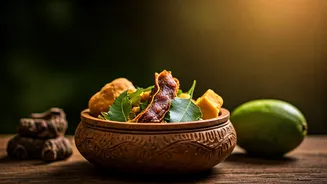
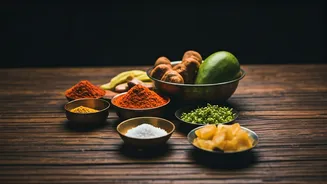
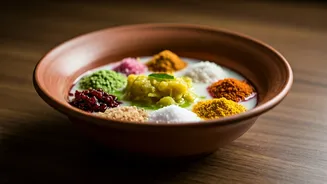
Home beautification is a significant part of Ugadi, with auspicious mango leaf torans adorning doorways, believed to invite good fortune and positive energy. Intricate rangoli designs are also created outside homes. A unique culinary tradition is 'Ugadi Pachadi,' a special dish meticulously prepared with six distinct tastes. Each flavor element—bitterness from neem flowers (sadness), sweetness from jaggery (happiness), tanginess from raw mango (surprise), sourness from tamarind (challenges), heat from green chilli (anger), and salt (balance)—serves as a potent reminder that life is a mosaic of diverse experiences, each contributing to our human journey. Panchanga Sravanam, the reading of the new year's predictions by priests or elders, is another vital ritual, offering insights into upcoming rainfall, agriculture, economic trends, and general prosperity, serving as a spiritual compass for the year.
Cultural Festivities and Reflection
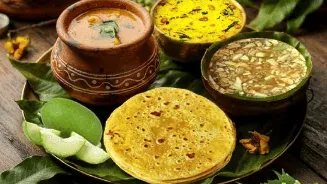
Ugadi is also a vibrant occasion for cultural expressions, often featuring traditional poetry recitations, especially within Telugu-speaking communities. The festive spread typically includes delicacies like pulihora, bobbatlu (holige), and various mango preparations, capitalizing on the seasonal availability of mangoes. Many also visit temples, seeking blessings from deities like Lord Vishnu and Lord Venkateswara for a year of prosperity, good health, and success. Philosophically, Ugadi encourages introspection on the past year while fostering optimism for the future, reinforcing the cyclical nature of time and the coexistence of joy and hardship. The Ugadi Pachadi's blend of tastes perfectly encapsulates this, emphasizing balance and resilience in navigating life's varied emotional landscape.