







Dark Matter's Enigma
Dark matter, a mysterious substance, constitutes a substantial portion of the universe's mass-energy content, yet it remains invisible, interacting with
ordinary matter only through gravity. Scientists are actively searching for ways to directly detect and understand its composition. Recent studies have brought scientists closer to a potential breakthrough, suggesting that dark matter may be composed of 'ghost particles.' These hypothetical particles, which interact very weakly with ordinary matter, could be the key to unlocking the mysteries of dark matter. The study of galaxy clusters offers promising prospects, as these massive structures could act as cosmic laboratories, providing insights into the behavior of dark matter and its interactions. Scientists are currently using advanced telescopes and particle accelerators to test this hypothesis, opening up a new era of research in astrophysics and cosmology. The ability to detect and analyze dark matter would revolutionize our understanding of the universe's structure, evolution, and future.
Ghost Particles Unveiled
The concept of 'ghost particles' as the building blocks of dark matter provides an intriguing avenue for exploration. These particles, also known as axions or other weakly interacting massive particles (WIMPs), are theorized to exist and make up the bulk of the universe's missing mass. Experiments at facilities such as CERN's particle accelerator recreate the conditions of the early universe, where these particles could have been created. Another exciting area of research includes studying dying stars. These stars may release axions during their final stages, potentially providing clues about their nature. By analyzing the light and other emissions from these celestial bodies, astronomers can search for telltale signs of axion interactions, thus providing evidence to support the 'ghost particle' hypothesis. The implications of finding dark matter composed of such particles would go beyond mere cosmological confirmation, potentially reshaping our grasp of fundamental forces and particle physics. This could lead to a deeper understanding of matter and the universe's evolution.
Cosmic Observations and Clues
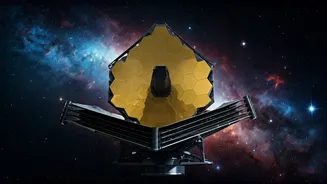
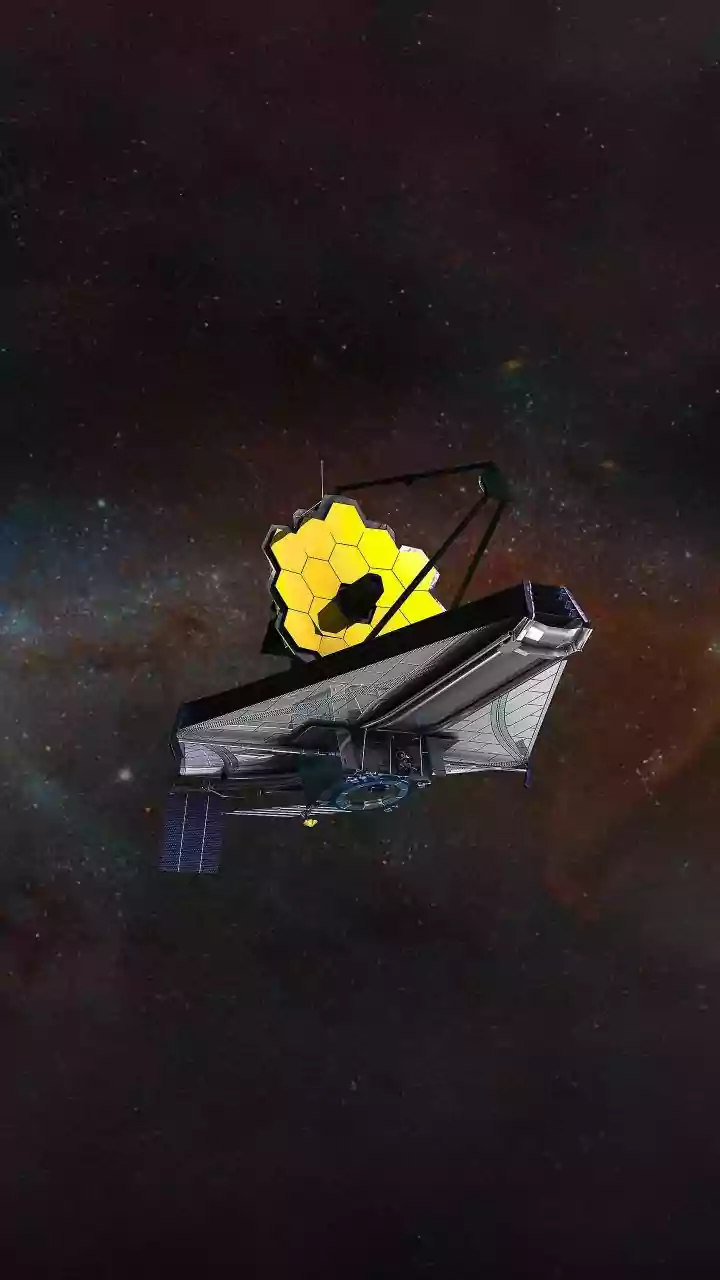
The James Webb Space Telescope (JWST) has emerged as a critical tool in the hunt for dark matter, capable of observing distant galaxies and quasars with unprecedented detail. The telescope's capabilities enable astronomers to explore the distribution of dark matter across cosmic distances, potentially revealing its nature and distribution. Simultaneously, the Hubble Telescope continues to play a pivotal role, tracking the behavior of stars and galaxies. Through these observations, scientists can infer the presence of dark matter and deduce its properties. For instance, observations of 'runaway' supermassive black holes racing through their galaxies offer evidence of dark matter's effects on galactic dynamics. These black holes, propelled by gravitational interactions with dark matter, give scientists a deeper view into the cosmos. Furthermore, studies on the way Mars influences Earth's climate indicate a much broader cosmic interaction. Each observation contributes to a clearer picture of how dark matter influences galaxies and the large-scale structure of the universe.
Beyond Conventional Thinking
The prevailing theories surrounding dark matter continue to evolve, with scientists exploring unconventional possibilities. One compelling hypothesis suggests that dark matter may be composed of massive exotic objects. These objects could interact through novel forces, thus affecting the structure of galaxies and galaxy clusters in unexpected ways. Furthermore, the search for 'dark' stars, which could have been formed in the early universe, offers a potential avenue for exploring new particle physics. These stars, theorized to be powered by dark matter, could illuminate otherwise inaccessible regions of space, revealing clues about the universe's first moments. The exploration of these radical concepts demands a blend of theoretical models and observational data, pushing the boundaries of our understanding of the cosmos. As scientists develop and improve experimental methods, these far-reaching theories have the potential to reveal entirely new aspects of our universe, expanding on our perception of reality.
Future Discoveries and Outlook
The path forward in dark matter research encompasses a diverse range of approaches, from new telescopes to more advanced particle accelerators. The construction and launch of future instruments, like the upgraded Hubble Telescope and the upcoming space-based observatories, are expected to significantly enhance our ability to study dark matter. Further advancements in data analysis techniques and computer simulations are anticipated to provide scientists with an even more comprehensive perspective of the universe's structure and the way dark matter interacts with ordinary matter. It is a long-term endeavor that needs international collaboration. As the quest for answers continues, it is essential to emphasize open-mindedness and innovative thinking. The study of dark matter is not just about understanding one aspect of the universe, but rather a journey of unraveling the fundamental laws that govern the cosmos.