





Rethinking Coffee's True Taste
The widely held belief that authentic coffee must be intensely bitter and black is a significant oversimplification that fails to capture the beverage's
full potential. True coffee appreciation requires a more mindful approach, encouraging a pause to savour its intricate taste, texture, temperature, and the way its flavours evolve over time. Engaging with speciality coffee provides an excellent avenue to dismantle the myth of bitterness as the sole indicator of quality. By experiencing its balanced profile, where acidity, sweetness, and body harmoniously coexist, one can readily discard the archaic notion that harshness equates to authenticity. The reality is that coffee has never inherently needed to be aggressively bitter to be considered genuine or of high quality; this perception is a construct that speciality coffee actively seeks to redefine.
Defining Speciality Coffee
Speciality coffee is recognized for its exceptional quality, achieving a score of 80 points or higher on a 100-point scale from certified Q graders. However, its significance extends beyond numerical ratings. It encompasses the entire journey of the bean, from its origin and traceability to the meticulous care taken at every stage of its cultivation and processing. Unlike mass-produced commercial coffee, which often prioritizes uniformity through blending, speciality coffee celebrates uniqueness. Each cup offers a narrative, detailing the specific soil conditions, farm altitude, regional climate, and the dedication of the individuals who nurtured the beans. This focus on provenance transforms a simple beverage into an intriguing lesson in geography and agricultural diversity.
The Art of Brewing
My initiation into this refined coffee world occurred at Libertario, a speciality coffee roaster located in Greater Kailash 2, which draws its heritage from the La Palma y El Tucan estate in Colombia. They curate a diverse selection of beans to introduce varied profiles to Delhi's coffee enthusiasts. I participated in their 'Omakase' coffee experience, a guided tasting that explored different brewing techniques, origins, and flavour characteristics through multiple beverages. This curated event was a profound sensory exploration, transitioning from traditional to highly experimental coffee preparations. The journey began with familiar notes of caramel and milk chocolate in their 'Paz' profile, offering a smooth and comforting introduction. Following this was 'Libre,' featuring bolder notes of cherry, brown sugar, and dark chocolate, crafted from Indian beans that showcased its layered complexity. This brew felt robust, ideal for those seeking an energizing morning cup.
Experimental Flavours Unveiled
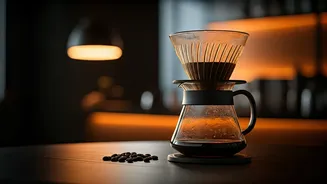
The experience then ventured into more experimental realms, beginning with the introduction of the Geisha varietal, highly esteemed in the coffee community. Varietals, akin to different types of apples, represent distinct coffee classifications. The first preparation, named 'Voyage,' presented an exquisite blend of jasmine, black tea, honey, and lavender notes, offering a vibrant yet sophisticated flavour that evolved with each sip, revealing its intricate complexity. Concluding the tasting was 'The Rebel,' a Geisha preparation characterized by notes of rose, orange blossom, raspberry, and dark chocolate. This offered a distinctly unconventional and experimental profile. Throughout this unhurried Omakase experience, the baristas engaged in a meticulous, almost ritualistic brewing process. Water was poured slowly over freshly ground beans, allowing them to bloom before gently coaxing out their flavours with patience. This deliberate pace encouraged a deep appreciation for the beverage, allowing for the observation of how the taste transformed as the coffee cooled, revealing subtle notes like a quiet, unfolding conversation.
A Modern Perspective
The philosophy of meticulous care extends to Pour Over Coffee Roasters in Chanakyapuri's Santushti Complex. This establishment aims to make exceptional coffee accessible without overt displays of exclusivity. Their focus is on letting the coffee's inherent quality speak for itself. They offer a range of beans, including Typica, Bourbon, and Geisha, alongside special harvests from India, Africa, and Indonesia, intending to cater to diverse palates without overwhelming the consumer. My visit to Pour Over was marked by a more informal and approachable atmosphere compared to Libertario. It's a space where one feels comfortable exploring coffee without pretension, and even their richer, chocolate-infused drinks are treated with respect, ensuring the coffee's essence remains central. The welcoming environment and the opportunity to engage with their brewing process enhanced the overall experience, making it feel inclusive and engaging.
Understanding Cupping and Bitterness
At Pour Over, I participated in my first coffee cupping session, a method for evaluating coffee's aroma, flavour, acidity, body, and aftertaste. This involves steeping coarsely ground coffee, breaking the crust, and loudly slurping from a spoon to discern quality and characteristics. Tasting a freshly prepared coconut-flavoured coffee was particularly enlightening. While industry experts identified notes of coconut oil, my palate detected the flavour of burnt husk, highlighting the personal nature of taste perception. This led to the realization that if flavour interpretation is so subjective, then why should a bitter Americano be considered inherently superior to a sweeter mocha? The cafe's knowledgeable staff also clarified that bitterness in coffee is often a result of brewing methods rather than an inherent characteristic. Over-extraction, using poorly quality beans, roasting too dark, excessively hot water, or letting coffee sit too long can all contribute to a harsh, astringent taste. Pour Over, founded by experienced roasters, pays meticulous attention to these details in every cup, ensuring a balanced and enjoyable experience.
Beyond the Basic Brews
Pour Over Coffee Roasters elevates the coffee experience by venturing beyond traditional offerings. They are known for introducing innovative concepts, such as whiskey barrel-aged coffee in Delhi, and plan to introduce other novel profiles to the Indian market. Their commitment to accessibility is evident in their diverse range of drinks beyond the standard Americano. I particularly enjoyed their strawberry mocha, which uniquely balanced the sweetness of strawberry and chocolate with the coffee's inherent flavour, treating it as an enhancement rather than a dominant element. This approach ensures that even milkier and fruitier beverages retain the coffee's integrity, being perceived as sophisticated concoctions rather than mere milkshakes. Similarly, their Raspberry Espresso Tonic offered a delightful interplay between the tartness of raspberry and the boldness of espresso, amplifying the coffee's character without overwhelming it. By affording such respect to all their coffee creations, Pour Over fosters a deeper appreciation for the bean and the beverage, reinforcing the idea that coffee is meant to be savoured and experienced, not just endured.