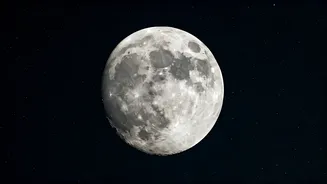

Embrace Lunar Eclipses
Lunar eclipses, a captivating spectacle, occur when the Earth positions itself directly between the sun and the moon, casting a shadow upon the lunar surface.
Observers witness a darkening or reddening of the moon during these events. The year 2026 features several lunar eclipses, each offering a unique viewing experience. For example, during a total lunar eclipse, the moon can take on a reddish hue, often called a 'blood moon,' due to the scattering of sunlight through Earth's atmosphere. Partial lunar eclipses, on the other hand, showcase a portion of the moon gradually disappearing as it enters Earth's shadow. The specific dates and viewing locations for these eclipses will be crucial. Keeping an eye on astronomical calendars will help you pinpoint when these fascinating celestial events will unfold in 2026, offering numerous opportunities to marvel at the moon's ethereal beauty.
Supermoons: Closer Looks
Supermoons, an eye-catching event, happen when a full moon coincides with its closest approach to Earth in its orbit, known as the perigee. This alignment causes the moon to appear larger and brighter than usual in the night sky. In 2026, several supermoons will grace the heavens, offering skywatchers the chance to witness an amplified lunar spectacle. These events offer excellent opportunities for detailed moon observations. When planning to observe a supermoon, it is advisable to find a location with minimal light pollution and a clear view of the horizon. Supermoons always provide stunning photo opportunities, allowing enthusiasts to capture the moon's increased size and luminosity against the backdrop of the night sky. Make sure to consult astronomical resources for exact dates and times.
Planetary Conjunctions
Planetary conjunctions, involving the moon and other celestial objects, offer delightful visual treats. A conjunction happens when two or more celestial bodies appear close together in the sky. Observing the moon in close proximity to planets like Saturn, Jupiter, or even bright stars creates visually appealing scenes. When the moon and a planet align, they create beautiful and easily observable conjunctions. The brightness and color of the moon and the nearby planets contrast dramatically in the night sky. These conjunctions often serve as memorable skywatching events. To get the best view of a conjunction, it is best to check the specific dates and times in advance to identify the optimal viewing windows. The precise location of each conjunction will also determine when and where to look for them.
Other Notable Events
Beyond eclipses, supermoons, and conjunctions, 2026 offers other exciting moon-related events. Depending on the timing, you might be able to witness the moon interacting with meteor showers. The bright moonlight, however, can sometimes interfere with observing fainter meteors, but it can also enhance the visibility of brighter ones. Moreover, the moon's position in relation to other celestial bodies, like nebulae or star clusters, might present amazing photo opportunities. For any specific celestial event, the moon's phase and position must be carefully considered. It's recommended to consult detailed astronomical calendars and resources to identify these diverse, lesser-known events and plan accordingly. Staying informed about moonrise and moonset times will help to fully enjoy these displays.
Best Viewing Tips
To fully enjoy the moon events of 2026, some tips will be helpful. Firstly, find a location with minimal light pollution, such as a rural area or a park, to maximize visibility. Ensure a clear view of the horizon. Using binoculars or a telescope can enhance the viewing experience. These tools will enable you to see the lunar surface in greater detail during the supermoons and even to observe conjunctions. Check the weather forecast and plan for clear nights. Carry warm clothing and maybe some refreshments for comfortable viewing. Using astronomical apps or online resources for moon phases, rise and set times, and event details is also advised. Furthermore, joining a local astronomy club can enhance your knowledge and provide opportunities to learn from others.
Document Your Journey
Consider documenting your moon-watching experience. Taking photos or videos of the moon during eclipses, supermoons, and conjunctions will help to preserve these moments. These images can be shared with others. To take good photos, a smartphone or a camera with a tripod can be used. When photographing the moon, experiment with different settings to capture the details. You can also keep a journal to record your observations, including the date, time, location, and a description of what you saw. This will help you remember and reflect on your experiences. Moreover, sharing your images and observations on social media or with astronomy communities can provide a means for connecting with other stargazers and contributing to a shared appreciation for the night sky.