



When is Vishu?
In 2026, the Malayalam New Year, known as Vishu, will be observed on April 15th. This date corresponds with the commencement of the month of 'Medam' in
the traditional Malayalam lunar calendar. While many consider this the start of the New Year, it's noteworthy that the official New Year in the Malayalam calendar traditionally begins with the month of 'Chingam'. However, particularly in the Malabar region, Vishu is widely embraced as the astrological New Year. The festival embodies the spirit of fresh starts, abundant blessings, and enduring hope for the coming twelve months, making it a cherished occasion across Kerala.
The Rich History of Vishu
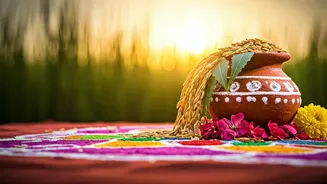
The historical tapestry of Vishu is intricately woven with ancient Hindu customs and precise astronomical observations. Its occurrence marks the significant moment when the sun enters the zodiac constellation of Aries, locally known as 'Mesha'. This celestial event has long been recognized across various Indian cultures as a propitious time, symbolizing the rejuvenation of life and the cyclical continuity of nature. Historically, Vishu has also been closely connected with Kerala's agricultural heritage, often coinciding with the peak of the harvest season and the inception of a new farming cycle. Over generations, the festival has gracefully evolved, retaining its foundational rituals while transforming into a broader cultural celebration that artfully blends mythology, astronomical insights, and time-honored traditions, making it a unique reflection of Kerala's heritage.
Deep Significance of Vishu
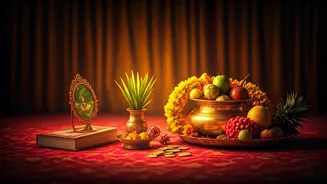
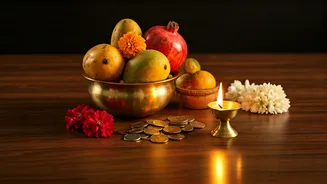
The profound significance of Vishu is deeply rooted in its potent symbolism of new beginnings, the promise of prosperity, and the infusion of positive energy for the year ahead. Celebrated at the dawn of the Malayalam month 'Medam', it aligns with the sun's auspicious transition into Aries. The central ritual, 'Vishukkani', involves observing a meticulously arranged collection of fortunate items at the first light of dawn, a practice believed to pave the way for abundance and good fortune throughout the year. Vishu also places a strong emphasis on expressing gratitude, fostering strong family bonds, and embracing generosity, exemplified by elders bestowing 'Vishukkaineetam' – gifts or money – upon younger family members. More than just its rituals, the festival cultivates a forward-looking mindset, encouraging optimism, a sense of renewal, and an eager anticipation of life's evolving possibilities.
Cherished Vishu Rituals
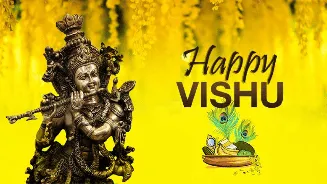
The celebration of Vishu is illuminated by a series of cherished rituals that imbue the festival with its unique charm and spiritual depth. Foremost among these is the 'Vishukkani,' an auspicious arrangement viewed first thing in the morning on Vishu day. This tableau typically features a divine idol (often of Lord Krishna), fruits, vegetables, rice, betel leaves, coins, and a mirror, symbolizing wealth, health, and spiritual well-being. Following this, families don new attire, symbolizing a fresh start. Prayers are offered to seek blessings for the year. A significant tradition is the 'Vishukkaineetam,' where elders give gifts, often money, to younger relatives and household staff, signifying prosperity and goodwill. The day culminates in a grand feast, featuring traditional Kerala delicacies, shared with family and friends, further strengthening community ties and celebrating the bounty of the harvest and the year to come.