








Cosmic Genesis Event
Approximately 50,000 years ago, a cataclysmic event reshaped India's landscape when a colossal meteorite, estimated to weigh two million tons and moving
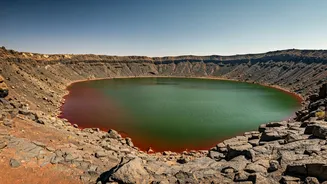
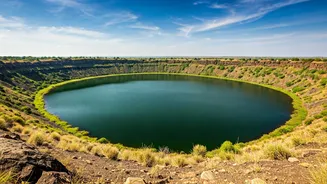
at incredible speeds, struck the Deccan Plateau. This impact, occurring within the tough basaltic rock, carved out the Lonar crater, a unique geological feature. The very rock composition of the crater, being identical to that found on Mars, has earned Lonar the moniker 'earthly twin of Mars.' This makes it an invaluable site for scientists, particularly NASA, who study the Red Planet. It offers a tangible terrestrial analogue for understanding Mars's past, especially when it may have harbored liquid water, effectively serving as a Martian landscape found right here on Earth. The crater's formation represents a dramatic intersection of celestial forces and terrestrial geology, leaving an indelible mark on the planet's surface.
Dual Water Mystery
Descending into the Lonar crater reveals an ecosystem where natural laws seem subtly altered. The steep, jungle-clad walls create an immersive environment, making the outside world feel distant and archaic. What's truly remarkable within the crater is the lake itself, which is not uniform but divided into two distinct bodies of water that remarkably do not mix. One section exhibits alkaline properties, while the other is decidedly saline. This peculiar chemical duality has puzzled researchers for a considerable period, presenting a fascinating natural phenomenon where a single body of water displays such contrasting characteristics. The co-existence of these two water types within the same basin is a testament to the unique geological and hydrological conditions of the Lonar impact site.
The Pink Transformation
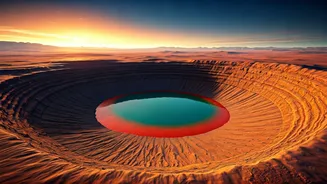
Lonar Lake is not static; it possesses a captivating ability to transform its appearance, demonstrating its dynamic biological nature. In 2020, the world witnessed an astonishing spectacle when the lake's waters abruptly turned a vivid, glowing pink. This dramatic change was not a sign of pollution or a natural disaster, but rather a vibrant display of microbial life. Specifically, a surge in the lake's salinity levels triggered a bloom of rare microorganisms known as Haloarchaea. These microbes, upon activation by the altered conditions, released pigments that bathed the entire lake in a stunning rose hue. This event serves as a powerful reminder that Lonar is a living, evolving environment, capable of surprising observers with its resilient and adaptable biosphere.
Echoes of History
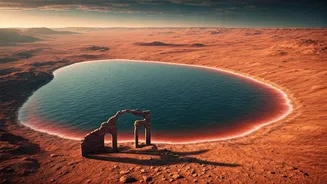
Dotting the perimeter of Lonar Lake are the remnants of ancient civilizations, known as the 'Ghost Temples.' These exquisite Hemadpanti ruins, dating back to the 12th century, are slowly being enveloped by the natural landscape, with silt and plant roots gradually reclaiming the stone structures. A profound sense of tranquility pervades these sites. Having endured for nearly a millennium, these stone edifices represent a relatively recent chapter in the vast chronological span of the crater itself. They stand as silent witnesses to the passage of time, illustrating how even human endeavors, built with permanence in mind, are subject to the enduring power of nature and the monumental scale of geological events like the Lonar impact.
Impact's Enduring Mark
The very ground beneath one's feet at Lonar Lake tells a compelling story of cosmic violence transformed into geological marvels. Close examination of the soil can reveal 'maskelynite,' a glassy material formed under the immense heat and pressure of the meteorite impact, or fragments rich in magnetic properties that can playfully disorient compass needles. These elements make Lonar a destination of profound interest for those fascinated by space and its influence on our planet. Each small fragment found is essentially a tangible memento from the stars, a piece of extraterrestrial material solidified into the Earth's crust. It offers a unique opportunity to connect with the precise moment in prehistoric times when the Earth's geological narrative was irrevocably altered by an event originating far beyond our atmosphere.
Timeless Perspective
As the sun dips below the crater's rim, casting elongated shadows that dance across the water's surface, one gains a deep appreciation for Lonar's significance beyond being a mere tourist attraction or scientific curiosity. It functions as a profound monument to time itself. For an astonishing 50,000 years, this geological formation has silently observed the close of the Ice Age, the rise and fall of numerous civilizations, and the slow, inexorable procession of stars across the night sky. Standing at Lonar feels akin to being at a nexus where Earth and the cosmos converge. It’s a powerful, humbling reminder that our planet is not a static entity but a dynamic sphere continuously shaped by the vast, ongoing processes of the universe.