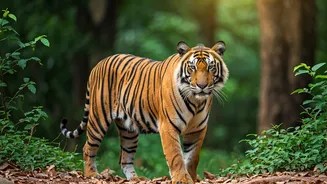







Big Cats Lost
An alarming two decades of illegal hunting have resulted in the tragic loss of 200 magnificent big cats across India, according to a recent revelation
through a Right to Information (RTI) query. This data, sourced from the Wildlife Crime Control Bureau (WCCB), paints a stark picture of the ongoing threats faced by these iconic species. The findings highlight a grim trend between 2005 and December 2025, underscoring the persistent challenge of wildlife protection in the country. The information obtained indicates a significant number of poaching incidents, demanding urgent attention and reinforced conservation efforts to safeguard India's precious feline populations from further decline.
Central India's Plight
Within the scope of these devastating figures, Central India has been identified as a significant hotspot for big cat poaching. The data indicates that a substantial portion, specifically 59 out of the total poaching cases, occurred within the habitats of this region. This makes it a critical area for concern and requires targeted interventions. While the RTI reply from the WCCB under the ministry of environment, forest and climate change provides state-wise breakdowns, it's crucial to note that these figures represent seizures, not necessarily the entirety of poaching activities. Stricter enforcement in certain areas might lead to higher seizure numbers, but the underlying problem of illegal hunting persists and demands comprehensive analysis in relation to population trends.
Tiger Poaching Figures
Delving deeper into the state-wise statistics for tiger poaching, Madhya Pradesh sadly leads the grim list with 36 recorded cases over the 20-year period. Following closely are Uttar Pradesh with 14 cases and Karnataka with 13. Maharashtra has reported nine cases, while Assam accounts for six. Other states also show concerning numbers: Uttarakhand and Kerala each reported four cases, and Tamil Nadu, Chhattisgarh, and Andhra Pradesh each recorded three. These figures highlight a widespread issue, although concentrated in certain areas, emphasizing the pervasive nature of the threat to India's tiger population. The demand for tiger parts in international markets is a significant driver of this illegal trade.
Leopard Poaching Patterns
The RTI data also sheds light on the poaching of leopards, with 92 such incidents recorded during the same period. The pattern for leopard poaching, however, appears more dispersed across the country compared to tigers. Himachal Pradesh accounts for the highest number of leopard poaching cases, with 21 incidents. Andhra Pradesh follows with eight, while Jammu and Kashmir and Punjab have six and five cases respectively. Uttar Pradesh, Uttarakhand, Madhya Pradesh, and Tamil Nadu each reported five leopard poaching cases. This widespread nature of leopard poaching, particularly in Himalayan states, suggests a potential link to increasing human-wildlife conflict.
Drivers of Poaching
Wildlife experts attribute the persistent poaching of big cats primarily to the high international demand for their body parts. Dr. YV Jhala, a prominent IUCN expert on big cats and former senior scientist at the Wildlife Institute of India, emphasizes that despite stringent laws, poaching remains a lucrative activity due to a robust market for these products, particularly in neighboring countries like China and other Southeast Asian nations. Furthermore, the fragmentation of forest areas, encroachment on wildlife corridors, and increased human and vehicular movement near big cat habitats are also contributing factors. This heightened human-wildlife interaction can lead to increased conflict, making leopards, in particular, more vulnerable.
Conservation Context
India is a global stronghold for tigers, housing approximately 3,600 of them, which constitutes about 75% of the world's total population. Similarly, the country supports around 13,800 leopards in its tiger habitats. While these numbers reflect a significant conservation success, the persistent poaching, even if only a fraction of it is caught, poses a serious threat. Experts like Dr. Jhala stress that seizure numbers need to be evaluated in conjunction with tiger population trends to fully understand the impact of poaching. Field observations also suggest that states like Jharkhand, Chhattisgarh, Odisha, and the Northeastern regions might also be significant, albeit perhaps less reported, hotspots for poaching-driven declines of large cats.