


Understanding Aurora Dynamics
The mesmerizing dance of the aurora borealis, often called the Northern Lights, is a captivating spectacle driven by intricate interactions between the Sun
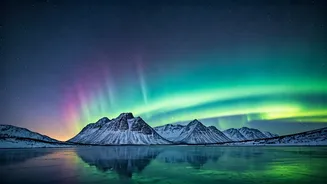
and Earth's atmosphere. The primary catalyst for these celestial light shows is the solar wind, a continuous stream of charged particles emitted by the Sun. When this solar wind encounters Earth, it can interact with our planet's magnetic field. Geomagnetic storms, which are significant disturbances in Earth's magnetosphere, play a crucial role in intensifying aurora activity. These storms are often triggered by coronal mass ejections (CMEs) or high-speed solar wind streams that reach Earth. The strength of these events, measured by indices like the Kp-index, directly influences how far south the auroras can be seen, sometimes extending visibility to mid-latitudes like Illinois and Oregon, or even further. Understanding these fundamental principles provides the framework for predicting when and where the aurora might be visible.
Forecasting Aurora Visibility
Predicting aurora displays involves monitoring various space weather phenomena. Aurora forecasts often highlight the likelihood of seeing the Northern Lights based on current and predicted solar activity. Factors like the speed and density of the solar wind, the presence of coronal holes (regions on the Sun where the magnetic field is open, allowing more particles to escape), and the arrival of CMEs are key indicators. When fast solar winds are directed towards Earth, or when CMEs are Earth-facing, the chances of geomagnetic storms and subsequent auroras increase significantly. These forecasts help enthusiasts know when to prepare for potential sightings. For instance, news about incoming CMEs or high-speed solar wind streams often precedes announcements of good aurora chances, particularly for observers at higher latitudes, though powerful storms can bring the displays much further south.
Factors Influencing Aurora Intensity
The intensity and geographic reach of the Northern Lights are directly linked to the dynamics of space weather. Minor geomagnetic storms might confine auroras to high latitudes, the Arctic regions, while stronger events, such as G2 or even G4 levels, can push the visible aurora boundaries much further towards the equator. Reports of severe G4 geomagnetic storms, for example, often indicate that auroras could be seen in areas like Illinois and Oregon. The Earth's magnetic field acts as a shield, guiding charged particles towards the polar regions, where they collide with atmospheric gases to produce the characteristic light shows. The composition of these gases (primarily oxygen and nitrogen) determines the colors of the aurora, with green being the most common, followed by reds, blues, and purples.
Timing Your Aurora Chase
For aurora enthusiasts, timing is everything. While auroras can occur at any time, certain periods offer better viewing opportunities. Forecasts often provide daily and weekend outlooks, highlighting periods of enhanced solar wind or incoming CMEs that could trigger more active displays. Observing auroras is generally best during periods of clear skies and away from light pollution. Winter months, with their longer nights, often present more opportunities for viewing, especially in northern locales. However, powerful solar events can create stunning displays even during other seasons. Many forecasts will mention whether conditions are "quiet" or if "activity could build," guiding observers on when to be most vigilant. Occasionally, unexpected solar flares or CMEs can lead to sudden, intense aurora events that might not have been predicted days in advance.