






Luzon's Volcanic Heart
Begin your journey on Luzon, the Philippines' most expansive island, a bustling home to millions. Nestled within this significant landmass lies Taal Lake,
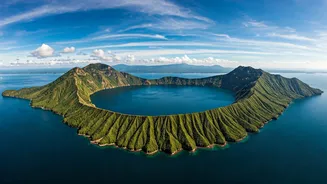
a body of water that, despite its serene appearance, is cradled by the caldera of a colossal volcano. This unique setting lays the groundwork for the extraordinary geological phenomena that follow, presenting a natural paradox that challenges conventional understanding of geography.
Volcano Island's Layers
Within the serene expanse of Taal Lake, an even more astounding feature emerges: Volcano Island. This distinct landmass is the direct result of intense volcanic activity, a testament to the Earth's fiery past. The presence of an island situated squarely in the middle of a lake is already remarkable, but the story of Volcano Island is just beginning to unfold, revealing further complexities as we delve deeper into its structure.
The Crater Lake Twist
The intrigue surrounding Volcano Island escalates when you discover another lake residing at its core. This is not just any lake; it's a crater lake, a body of water filling the mouth of the volcano itself. This adds another bewildering layer to Taal's geography – a lake perched atop an island, which itself sits within another lake. This intricate arrangement showcases nature's capacity for creating astonishing and seemingly contradictory landscapes.
Vulcan Point's Paradox
The ultimate geological twist lies at Vulcan Point, a minuscule island located within the crater lake of Volcano Island. This means you have an island, situated in a lake, on an island, which is itself in a lake, all within the grand island of Luzon. This nested structure, where an island exists within a lake that is contained within another island, pushes the boundaries of natural formations and highlights the rule-bending creativity of the planet.
Nature's Layered Puzzle
The formation of this complex structure is a result of dynamic geological processes. Volcanic eruptions have caused land to collapse, leading to the formation of lakes. Subsequent eruptions have then pushed land masses back up, creating new islands. This cyclical process of eruption, collapse, and emergence has effectively stacked these geological features layer by layer, much like a natural puzzle meticulously assembled over millennia, resulting in the unique and layered environment of Taal.
Beauty and Danger
While the geological intricacy of Taal Lake is a breathtaking spectacle, it is also a potent reminder of nature's raw power and unpredictability. The area has experienced significant volcanic activity, notably the violent eruption in 2020, which blanketed the surrounding skies with ash for miles. This underscores the inherent risks associated with visiting such a geologically active and dynamic location.
Visiting Taal Lake
For those intrigued by this natural wonder, Taal Lake is conveniently located near Manila, making it an accessible destination. The experience is known for being very affordable, offering a budget-friendly exploration of its unique landscape. The optimal period for a visit is between November and February, when the weather conditions are generally more favorable for enjoying the sights and the surrounding environment.