







Budget's Strategic Positioning
The budget is crafted to position India strategically to manage its economic growth with both judgment and resilience. This approach indicates a proactive
stance toward fiscal management, aligning with the current economic climate and future challenges. The government is making substantial investments to boost various sectors and drive overall economic expansion. These initiatives are not just about short-term gains but also about creating a robust economic framework capable of withstanding global economic pressures. This focus on judgment and resilience highlights the government's commitment to sustainable and well-managed growth, ensuring that economic development is both stable and adaptable.
Key Investment Strategies
A core aspect of the budget revolves around significant investments across different sectors. One of the notable areas is the commitment to Carbon Capture, Utilization, and Storage (CCUS), with an allocation of Rs 20,000 crore over five years. This investment shows the government's dedication to reducing emissions and promoting sustainable practices, which can stimulate innovation and attract foreign investment. Besides, these strategic investments reflect a broader commitment to enhancing the infrastructure, which in turn will improve the country's economic competitiveness and create more opportunities for individuals. Such investments are vital for long-term growth and stability, encouraging a cycle of investment, job creation, and economic advancement.
Focus on Individual Taxpayers
The budget also addresses the needs and interests of individual taxpayers. It includes measures and changes that directly affect how individuals manage their finances. The specifics of these changes are not detailed in the context, but it is indicated that they aim to provide relief or benefits to taxpayers. This could involve modifications to tax slabs, deductions, or other financial incentives that impact personal financial planning. The government's attention to the individual taxpayer shows its commitment to inclusive growth and ensuring that the benefits of economic development are broadly shared, reinforcing the relationship between citizens and the government through fiscal policies that respond to the taxpayer's needs.
Freight Corridor Boost
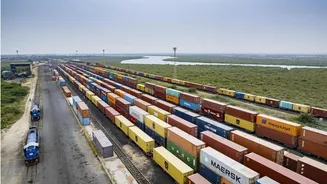
Another notable project discussed in the context is the Dankuni-Surat Dedicated Freight Corridor (DFC). This infrastructure undertaking is set to improve the cargo movement from Maharashtra and Gujarat ports, thus improving efficiency. The DFC reduces congestion, and provides a quicker, more dependable way to move goods across the region. This is especially important for businesses that depend on efficient logistics to get their products to market, which contributes to greater competitiveness and attracts more investment in the region. The DFC project also supports better connectivity and promotes the efficient integration of various industries. Overall, it reflects a broader strategy to develop infrastructure to drive economic growth.