







Enveloping in Fabric
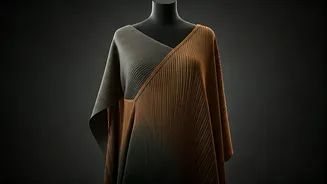
The most enduring and fundamental approach to sun defense involved deliberately covering the skin with protective layers. Early humans recognized the efficacy
of draping themselves in garments fashioned from animal hides and plant fibers. As civilizations advanced, materials like linen became prevalent for clothing, designed not only to block the sun's intense rays but also to mitigate the oppressive heat of hot climates. This practice remains remarkably relevant today, particularly in arid regions and areas experiencing prolonged periods of high temperatures, where such attire continues to be a primary means of sun avoidance.
Seeking Shade and Shade Tools
As far back as 3000 BCE, people actively sought refuge from direct sunlight. The development and use of accessories like parasols and broad-brimmed hats became common strategies to create personal pockets of shade. The simple act of avoiding the sun's most potent rays, especially during the midday peak, was a widely adopted and practical method for preventing sunburn and heatstroke. This illustrates a deep, intuitive understanding of the sun's powerful impact and the need for strategic avoidance.
Paleness as Prestige
In certain historical contexts, the ability to avoid sun exposure evolved into a marker of social standing. By the 16th century in Europe, maintaining a pale complexion was highly desirable and associated with those who did not perform manual labor outdoors. To achieve and preserve this look, women would employ strategies such as wearing protective face coverings known as visard masks and diligently seeking shaded environments. This highlights how sun protection was intertwined with societal beauty standards and class distinctions.
Earthen Barriers
Ancient peoples utilized natural earth-based substances like ochre, mud, and clay, applying them directly to their skin. While these materials might have initially served purposes related to rituals or adornment, they also inadvertently functioned as a physical barrier against the sun's ultraviolet radiation. The application of these pastes created a layer that helped to deflect sunlight, offering a rudimentary form of protection that predated scientific understanding of UV rays.
Botanical Balms
Across various ancient cultures, natural oils and plant extracts were a go-to for skin care, including some sun protection. Ingredients such as olive oil, rice bran, jasmine, and other botanical derivatives were commonly used. While their efficacy in blocking UV rays was not comparable to modern sunscreens, substances like olive oil provided a mild level of protection, estimated to be around SPF 8. This demonstrates an early exploration of plant-based resources for shielding the skin.
Mineral and Herbal Formulations
The use of minerals, such as zinc oxide, as a protective agent dates back to at least 500 BCE in regions like India. Furthermore, ancient communities developed early forms of rudimentary sunscreens by concocting mixtures that combined various plant-derived compounds and natural elements. These early formulations, though primitive, represent a significant step in the long history of seeking effective ways to mitigate sun damage through topical applications.