



Introduction to the Dish
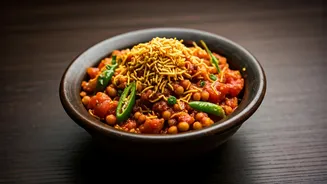
Kathiyawadi Sev Tamatar ki Sabji is a popular and robust Gujarati dish, celebrated for its swift preparation and bold flavors. Primarily featuring tomatoes
as its base, it gets a unique texture and taste from the addition of thick gram flour sev (also known as ganthiya) just before serving. This culinary creation is not confined to Gujarat; it has also garnered appreciation in neighboring states like Rajasthan and Maharashtra, where slight regional adaptations lend distinct nuances to its overall profile. Its inherent simplicity and speed make it an ideal candidate for weeknight dinners or whenever time is of the essence, offering a comforting and spicy respite without a lengthy cooking process. The essence of this sabzi lies in its aromatic tempering and the delightful interplay of soft tomatoes with crunchy sev.
Key Components & Flavor Profile
The heart of Kathiyawadi Sev Tamatar ki Sabji lies in its core ingredients and the masterful blending of spices. The foundation is built upon ripe tomatoes, which are cooked down to form a tangy and slightly sweet gravy. This is achieved through a tempering process that begins with heating oil or ghee, followed by the addition of cumin seeds, asafoetida (hing), finely chopped green chilies, and ginger paste, creating an aromatic base. Basic powdered spices such as turmeric, red chili powder, and coriander powder are then incorporated, enhancing the dish's color and depth of flavor. A touch of sugar or jaggery can be added to balance the tanginess of the tomatoes, a characteristic often found in the Gujarati rendition. The star ingredient, thick sev, is added at the very end to retain its crispness, providing a delightful textural contrast to the soft tomato gravy. Fresh coriander leaves are the final flourish, adding a burst of freshness and visual appeal.
Regional Variations Explained
While the core concept of Sev Tamatar ki Sabji is shared across regions, distinct variations showcase local culinary preferences. The traditional Gujarati Kathiyawadi version prioritizes a longer cooking time for the tomatoes, which results in a richer, thicker gravy with a subtle sweetness, often enhanced by jaggery or sugar. It predominantly uses thick sev, or ganthiya, contributing a substantial bite. In contrast, the Rajasthani iteration is renowned for its potent spiciness and assertive flavors. This version frequently incorporates garlic chutney and might feature a tempering that includes mustard seeds, curry leaves, and onions. Some Rajasthani preparations may also introduce yogurt for added creaminess, and Ratlami sev is a popular choice for its extra kick and crunch. These differences highlight how regional ingredients and spice preferences shape a dish while maintaining its fundamental identity.
Effortless 15-Minute Preparation
Creating this delicious Kathiyawadi Sev Tamatar ki Sabji is remarkably straightforward, fitting perfectly into a busy schedule. Begin by heating oil in a pan and letting mustard seeds splutter. Next, add cumin seeds and asafoetida, followed by sautéed green chilies and ginger paste until fragrant. Introduce finely chopped or crushed tomatoes to the pan and cook them until they soften and the oil starts to separate, indicating they are well-cooked. Stir in the turmeric, red chili powder, coriander powder, salt to taste, and optionally, a teaspoon of sugar or jaggery. Add about a cup of water to achieve a medium-consistency gravy and let it simmer for 5-7 minutes, allowing the flavors to meld. Finally, remove the pan from the heat and gently fold in the thick sev just before serving. Garnish generously with fresh coriander leaves for a final touch of freshness. This method ensures the sabzi is ready in approximately 15 minutes.