





Pranayama's Central Role
Traditional Yoga masters considered Pranayama, the art of breath control, to be the very essence of the practice. While physical postures (asanas) serve
to prepare the body, Pranayama is the sustaining force that maintains health and vitality throughout life. Unlike asanas, which can become difficult or impossible with age or physical limitations, Pranayama remains accessible, offering a continuous pathway to well-being. This vital aspect of Yoga is often overlooked, as many modern interpretations focus primarily on the physical benefits of postures, such as flexibility and strength, leading to a common misunderstanding of Yoga's true scope. The eightfold path of Yoga, with Pranayama as a cornerstone, is frequently overshadowed by the visual appeal and performance aspects of asanas often showcased on digital platforms.
Beyond Asanas: The Power of Breath
Pranayama is increasingly being recognized for its significant role in promoting proper breathing techniques and enhancing mental health. However, its profound ability to sustain the body's functions and overall health through breath alone is still not widely understood. Classical Yoga teachings consistently emphasize Pranayama over asanas as the more critical element for maintaining robust health. This is because asanas primarily address the physical structure of the body, leading to visible changes that can be admired. In contrast, Pranayama delves into the physiological dimension, directly influencing the five vital energies, or 'panch pranas' (prana, apana, samana, udana, and vyana), which govern all bodily functions. These include digestion, circulation, excretion, and the nervous system, all of which are revitalized by Pranayama, placing it at a higher level of importance for systemic health compared to postures focused on appearance.
Prana: More Than Just Breath
The term 'Prana' encompasses a much broader concept than simply the air we inhale. It is understood as a pervasive cosmic life force that animates all living beings and nature. While oxygen serves as the physical vehicle for prana, prana itself is the underlying energy that sustains life. This vital force powers speech, thought, senses, and the internal organs. In Ayurvedic principles, prana is closely linked to Vata dosha, governing all movement, function, and activity within the body, and maintaining a strong connection with the nervous system. Therefore, Pranayama is not merely about improving breathing or lung capacity; it's about establishing a profound balance and vitality in both mind and body, ultimately facilitating access to inner consciousness and energy as one progresses in their Yoga journey. Practices like Nadi Shodhana (alternate nostril breathing) are key to achieving this state.
Physiological Benefits of Pranayama
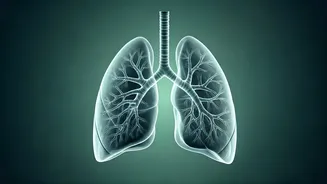
The controlled manipulation of prana through Pranayama yields significant physiological benefits, including the potential to direct energy for healing and enhance the body's self-healing processes, thereby potentially prolonging life. Research indicates that slow, deep, and predominantly abdominal breathing, a hallmark of Pranayama, is more beneficial. This is because a larger volume of air engages in gas exchange within the lungs, ensuring efficient oxygen delivery to the body. This type of yogic breathing, which involves favorable coordination of intrathoracic pressures, improves both general and pulmonary circulation in terms of quantity and quality, even without strenuous muscular exertion. This makes yogic breathing techniques demonstrably superior to simple deep breathing exercises for overall cardiovascular and respiratory health.
Lifelong Practice, Timeless Health
As individuals age or face mobility challenges, the practice of asanas may become less feasible. However, Pranayama remains a potent and accessible tool for maintaining health and vitality, adaptable to seated or supine positions. It serves as a method to achieve 'unitary prana,' leading to inner energy consciousness, as described by Yoga scholars. Consequently, breath and higher yogic practices become lifelong companions, supporting not only physical and mental well-being but also aiding in life's deeper quests and personal growth. The ideal times to practice Pranayama are early morning, around sunset, and before meditation. For those beginning their journey, the spring (Vasanta Ritu) and autumn (Sharad Ritu) seasons are considered auspicious for commencing practice, facilitating progress with greater ease, as advised by traditional Yoga texts.