

Holi's Dual Date Dilemma
As the vibrant festival of Holi approaches in 2026, a familiar question arises: is the celebration slated for March 3rd or March 4th? This annual ambiguity
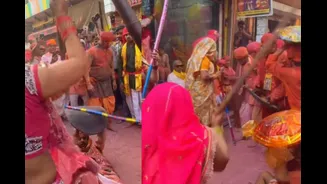
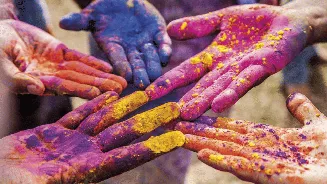
often stems from the precise celestial calculations that dictate auspicious timings. Holi, a festival that heralds the arrival of spring and bursts with colour, is observed in the Hindu month of Falgun. It's a time of immense joy, where people shed inhibitions, smear each other with vibrant powders and water, and reaffirm bonds of friendship and community, forgetting past grievances in a spirit of unity and playfulness. The significance of colours and the playful spirit are central to this beloved Indian festival, making its exact timing a subject of keen interest for celebrants across the nation and beyond.
Ancient Roots of Holi
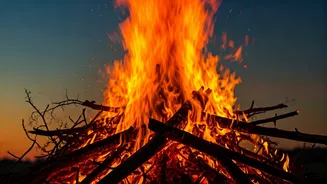
The origins of Holi are woven into the fabric of ancient Indian traditions, with scholarly perspectives suggesting its genesis in Vedic fire rituals. Texts like the Rigveda allude to 'Holaka,' or purification bonfires, lit during Phalguna (February-March) to mark the harvest, ward off winter's negativity, and welcome the spring season (Vasanta). Initially, these were simple agrarian ceremonies focused on renewal. Over time, particularly by the Puranic era, elaborate narratives enriched the festival's lore. The most prominent legend involves Prahlad, the devoted son of the demon king Hiranyakashipu, who defied his father by worshipping Lord Vishnu. Hiranyakashipu's sister, Holika, possessed a boon rendering her immune to fire, and she attempted to immolate Prahlad. However, the divine intervention ensured Holika perished in the flames while Prahlad remained unharmed, establishing the tradition of Holika Dahan bonfires as a symbol of good triumphing over evil. Further embellishments arose from tales of Lord Krishna's playful antics during the festival, which inspired numerous folk stories and are beautifully captured in the devotional songs (bhajans) of poets like Surdas.
Celebrations Across India
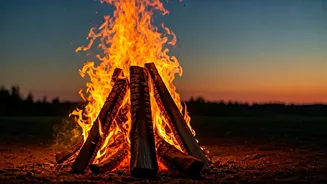
Holi's spirit of festivity manifests with diverse regional expressions, yet the core rituals remain largely consistent across India. The festivities commence with Holika Dahan, also known as Chhoti Holi, a day before the main event. This involves the ceremonial lighting of a pyre, accompanied by offerings of ghee, cow dung cakes, and coconuts, along with prayers for familial protection. The following day, the jubilant festival of Holi unfolds. It typically begins with the playful application of colours, often starting with idols in homes or temples, followed by prayers to the Kul Devta (family deity). Subsequently, people venture out to share in the colourful revelry with friends and relatives. In many communities, the day concludes with families gathering in the evening to exchange good wishes, seek blessings, and share delicious festive meals, reinforcing social bonds and communal harmony.
Holi 2026 Dates Defined
For the year 2026, the festival of Holi will be celebrated on Wednesday, March 4th, with the preceding Holika Dahan scheduled for Tuesday, March 3rd. The Purnima Tithi, or full moon phase, commences at 5:55 PM on March 2nd and concludes at 5:07 PM on March 3rd. Crucially, the Holika Dahan Muhurta, the auspicious time for the bonfire ritual, is set between 6:22 PM and 8:50 PM on March 3rd, offering a duration of 2 hours and 28 minutes for this observance. It is important to note the presence of Bhadra, an inauspicious period, which occurs in two phases: Bhadra Punchha from 1:25 AM to 2:35 AM and Bhadra Mukha from 2:35 AM to 4:30 AM on March 3rd. As per ancient Hindu scriptures and astronomical guidelines, Holika Dahan should ideally be performed during Pradosh Kaal (the period after sunset) while Purnimasi Tithi is still prevalent, ensuring that the ritual is conducted free from the influence of Bhadra. Therefore, the Holika Dahan on March 3rd will take place during Pradosh Kaal without Udaya Vyapini Purnima, aligning with these traditions.