


Koala's Gut Secret
Koalas, often perceived as gentle, cuddly marsupials dozing peacefully in eucalyptus trees, have a truly unusual method for developing a healthy digestive
system. To properly process the toxic leaves they consume, young koalas must ingest a special type of fecal matter, known as pap, directly from their mother's anus. This unique practice, while unappealing to humans, is crucial for inoculating their gut with the necessary bacteria to break down eucalyptus, a diet that would be poisonous to most other animals. This essential process is a stark contrast to their plush-toy-like appearance, highlighting a fundamental aspect of their survival that is far from conventional. Their seemingly tranquil existence is underpinned by this deeply biological necessity, demonstrating nature's ingenious, albeit unconventional, solutions for species adaptation and sustenance, ensuring the koala can thrive on a diet few others could tolerate.
Sea Otters' Aggression
Sea otters are widely adored for their charming habit of holding hands while floating and their skillful use of tools to crack open shellfish. However, beneath this endearing surface lies a surprisingly aggressive nature, particularly among the males. During mating seasons, male sea otters can exhibit forceful behaviors, including biting females' faces and relentlessly pursuing them. In rare and disturbing instances, they have even been known to abduct and hold pups of other otters hostage, a behavior that significantly deviates from their gentle public image. This demonstrates a complex social dynamic that includes territorial disputes and forceful mating rituals, revealing a more formidable side to these beloved marine mammals that goes beyond their playful antics and public perception as consistently gentle creatures.
Dolphins' Ruthless Tactics
Dolphins consistently rank high on lists of friendly and intelligent animals, celebrated for their playful interactions with humans and impressive acrobatic displays. Yet, these charismatic marine mammals are also known for their aggressive tendencies, often exhibiting bullying behavior within their own species and towards others. They have been observed to torment their prey by tossing seals or other pinnipeds and have been involved in violent altercations with different species. Alarmingly, they have also been documented killing porpoises and even their own calves, a behavior often linked to establishing social hierarchies and managing competition for resources. This duality showcases a sophisticated yet harsh social structure where dominance and survival instincts often override their perceived gentle nature, revealing a more complex and sometimes brutal reality to their interactions.
Praying Mantis Mating
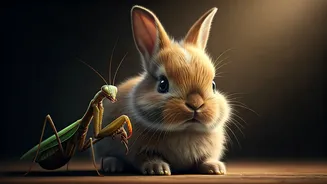
The praying mantis, with its seemingly serene stillness and delicate, swaying limbs, presents an image of tranquil grace. However, this facade hides a startling reproductive strategy: sexual cannibalism. In a significant number of cases, the female mantis will consume the male during or immediately after the mating process. This gruesome act is not arbitrary but serves a vital purpose for the female; it provides essential nutrients required for developing her eggs, especially if she is in a state of hunger. While from an evolutionary standpoint, this practice is an efficient method for ensuring the survival and propagation of the species by maximizing the resources for the next generation, it undeniably presents a chilling and eerie aspect to their life cycle, contrasting sharply with their delicate appearance.
Cats' Peculiar Presents
For devoted cat owners, the 'gifts' their feline companions bring are a familiar, though often unsettling, part of the pet-owner relationship. Domestic cats, driven by their ingrained hunting instincts, often present their humans with prey, frequently in a half-dead or deceased state. This behavior is not merely an act of aggression but a complex expression of their natural instincts and a form of communication. It can be interpreted as a way for them to share their hunting prowess, marking their territory within the home, or even as a misguided attempt to provide for their human family, akin to how they would feed kittens. This unique expression of affection, rooted in their predatory heritage, can be quite disturbing for those unaccustomed to the wilder side of their beloved pets, highlighting their innate predatory drive even in a domesticated setting.
Anglerfish's Parasitic Union
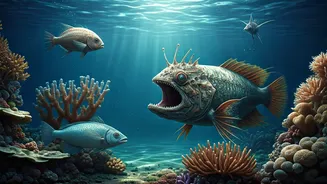
In the mysterious depths of the ocean, anglerfish exhibit a reproductive strategy that is as bizarre as it is fascinating, reminiscent of carrying a partner in a symbiotic, albeit parasitic, union. Certain species of deep-sea anglerfish possess a unique adaptation where the tiny male fish attaches itself permanently to the much larger female. The male essentially fuses with her body, becoming a dedicated source of sperm, functioning more like an external reproductive organ than an independent creature. This remarkable commitment allows the female to access sperm whenever needed, ensuring successful reproduction in the vast, dark expanse of the deep sea where finding a mate is a rare event. The female may even host multiple males simultaneously, showcasing an extraordinary evolutionary solution to the challenges of procreation in an extreme environment, a stark contrast to their often cartoonish appearance with glowing lures.