





The Native Red Squirrel
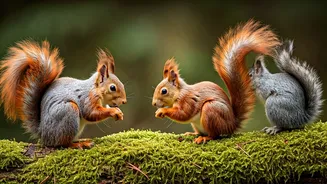
The European red squirrel, scientifically known as Sciurus vulgaris, is a charming inhabitant of woodlands across Europe and northern Asia. Easily identified
by its vibrant russet coat and distinctive ear tufts, especially noticeable during winter, this squirrel is a familiar sight in the forests of the UK and Scandinavia. Their primary food sources are the seeds from conifer cones, supplemented with hazelnuts, berries, and fungi. They are adept at creating hidden caches of food to sustain them through the colder months. While once more common, their populations, particularly in the UK, have seen a notable decline. Their specialized diet, centered around coniferous forest resources, makes them susceptible to habitat destruction and diseases. They are a testament to adaptation in specific forest environments.
The Invasive Grey Squirrel
Originating from North America, the Eastern gray squirrel (Sciurus carolinensis) found its way to Britain and other European locales in the late 19th century. Unlike their red counterparts, grey squirrels boast a highly adaptable and opportunistic diet, consuming nuts, seeds, fruits, fungi, tree bark, and even small birds or their eggs, which contributes to their survival advantage. These squirrels are now a common presence not only in their native United States and Canada but also across the UK, Ireland, and parts of Italy. Their larger size and greater adaptability allow them to outcompete red squirrels for essential resources like food and shelter. A critical factor in their ecological impact is their role as carriers of the squirrelpox virus, which proves fatal to red squirrels while leaving them unharmed. This combination of competitive prowess and disease transmission makes them a significant ecological concern, further exacerbated by their habit of stripping tree bark, which damages woodland health.
The Vibrant Rainbow Squirrel
Known scientifically as the Malabar giant squirrel (Ratufa indica), the creature often referred to as the 'rainbow squirrel' hails from India and stands in stark contrast to its smaller relatives. This arboreal giant is characterized by its spectacular, multicolored fur, a vibrant mosaic of deep maroon, rust, purple, cream, and orange hues. Their diet is predominantly herbivorous, consisting of fruits, nuts, flowers, and tree bark. These magnificent squirrels reside in the tropical forests of India, thriving in areas like the Western Ghats and parts of Maharashtra and central India. Reaching lengths of up to three feet, including their tail, they are truly impressive. They spend the majority of their lives high in the canopy, capable of impressive leaps between branches, covering distances of up to 20 feet. While not considered dangerous to humans due to their shy nature and preference for arboreal life, they can defend themselves if threatened, much like any wild animal.
Shared Squirrel Traits
Despite their geographical origins and distinct appearances, all three squirrel species share fundamental characteristics rooted in their evolutionary heritage. As members of the Sciuridae family, they possess powerful hind legs, perfectly evolved for agile climbing and impressive leaps through their arboreal habitats. Their bushy tails serve crucial dual purposes: providing balance as they navigate complex environments and acting as a sophisticated means of communication. Like many rodents, they exhibit a strong instinct for resource management, diligently storing food for lean times. Furthermore, these squirrels play an indispensable role in maintaining forest health and regeneration. By burying and subsequently forgetting some of their stored food, they contribute significantly to seed dispersal, helping new trees to grow and ensuring the continued vitality of their ecosystems.