







The Worry Trap
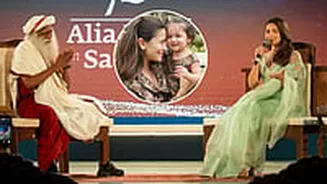
In a candid conversation, spiritual guru Sadhguru addressed the common anxieties of parents, including actress Alia Bhatt. He firmly stated that a parent consumed
by worry is not truly beneficial to their child; rather, this anxiety becomes a burden that can negatively impact both the child's development and the parent's own well-being. Sadhguru highlighted that this constant state of unease stems from an adult perspective that often overcomplicates life. He suggested that this worry is counterproductive, as children between the ages of three and six typically exhibit a natural exuberance and happiness, a stark contrast to many adults who find it challenging to maintain their own happiness, often requiring significant effort to feel joyful.
Observing Life's Joy
Sadhguru presented a thought-provoking notion for parents, specifically advising Alia Bhatt to learn the art of living from her own 3.5-year-old daughter, Raha. He questioned the premise of parents needing to teach their children, posing that between the parent and the young child, the child often possesses a greater capacity for pure joy. Instead of focusing on imparting lessons, Sadhguru encouraged parents to act as facilitators or 'consultants' for their children's lives. He urged them to simply observe their children, emphasizing that a child's perspective is inherently closer to the essence of life. This shift in perspective suggests that adults could benefit from mirroring the unburdened, present-moment experience of young children.
Parent as Consultant
Expanding on his unique approach to parenting, Sadhguru proposed a reimagining of the parental role. He suggested that rather than viewing themselves as instructors with a wealth of knowledge to bestow, parents should adopt the mindset of a consultant. This implies a supportive, guiding presence rather than an authoritative teacher. Sadhguru pointed out that adults, with their accumulated life experiences and often complex viewpoints, can sometimes cloud their judgment and become overly focused on minor issues. He believes that by stepping back and observing their children, parents can gain a fresh perspective on life, recognizing that children often embody a more authentic and joyful existence, unburdened by the anxieties that typically affect adults.