



Shahi Tukda's Royal Charm
Experience a taste of regal indulgence with Shahi Tukda, a dessert with roots tracing back to the opulent Mughal kitchens. This "royal slice" is believed
to have been influenced by 16th-century Central Asian breads or Egyptian Um Ali pudding, further refined under Emperor Shah Jahan. The preparation involves deep-frying thick slices of bread in ghee until they achieve a beautiful golden hue. These fried pieces are then immersed in a fragrant sugar syrup infused with cardamom and saffron. To complete this decadent creation, they are layered with a rich, thickened rabri or condensed milk and generously adorned with slivered almonds, pistachios, and a touch of edible silver leaf (varq). Served chilled, Shahi Tukda offers an exquisite combination of creamy texture and delightful crunch, making it a perfect centerpiece for any Eid celebration.
Sheer Khurma's Silky Sweetness
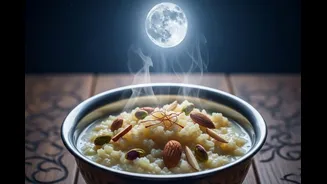
Sheer Khurma, a name that literally translates to "milk with dates," is an indispensable sweet treat for Eid al-Fitr, with origins linked to Persian migrants in 16th-century India, particularly flourishing as a Hyderabad specialty. The making of this beloved dessert begins with roasting thin vermicelli (seviyan) in ghee, along with dried dates, pistachios, and almonds, and a hint of cardamom. This mixture is then gently simmered in full-fat milk until it reaches a wonderfully creamy consistency. Sweetened with sugar and often flavored with rose water or saffron, the dessert is typically chilled overnight. The result is a delightful interplay of silky strands of vermicelli enveloped in rich, nutty milk, a universally cherished delicacy that appeals to all ages during the festive season.
Basbousa's Syrupy Delight
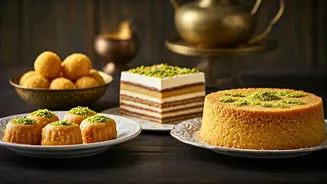
Originating from Ottoman Egypt, known then as Namoura, Basbousa is a delectable semolina cake that journeyed through trade routes to grace Arab homes and Indian Muslim kitchens alike. This delightful dessert is crafted by combining coarse semolina, yogurt, butter, and baking powder into a batter, which is then baked in a tray pre-soaked with syrup. Once the cake is baked and slightly cooled, a hot sugar-lemon syrup is generously poured over it, allowing the cake to absorb the sweet liquid. A final flourish of desiccated coconut or chopped almonds is added for texture and flavor. Often cut into diamond shapes, Basbousa offers a wonderfully syrupy, nutty chewiness that is both comforting and refreshing, providing a delightful contrast to the summer heat.
Rabri and Malpua Harmony
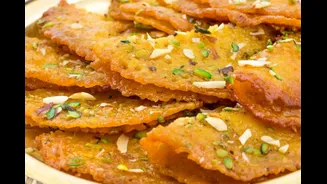
This section explores the classic North Indian pairing of Rabri and Malpua. Rabri is a luscious dessert made by slowly simmering milk and continuously scraping the milk solids that form at the bottom, resulting in a thickened, rich cream. Malpua, on the other hand, is an ancient pancake with a history that poets in 13th-century Bengal wrote about, later refined during the Mughal era. To make Malpua, a batter is prepared using refined flour (maida), semolina (rava), fennel seeds, and milk. Small, coin-sized portions of this batter are then fried in ghee until they develop delicate, lacy edges and a golden-brown color. These fried pancakes are then promptly soaked in sugar syrup. The final touch involves drizzling the rich rabri over the syrup-soaked malpuas and garnishing them with chopped pistachios, creating an indulgence that is both crispy and soft, drenched in sweetness.
Khubani ka Meetha's Tangy Twist
Khubani ka Meetha is a captivating apricot dessert that finds its roots in the royal kitchens of Hyderabad during the Nizam era, likely an 18th-century creation blending Central Asian apricot traditions, introduced by the Mughals, with the local Deccani palate. The preparation begins by soaking dried apricots overnight. These softened apricots are then deseeded and simmered with sugar, saffron, cardamom, and a hint of lemon until they achieve a jam-like consistency. Chopped apricot kernels and almonds are often incorporated into this mixture or used as a layered element. The dessert is typically served chilled, with the warm compote of apricots beautifully contrasted by a dollop of cold whipped cream. Garnished with pistachios, Khubani ka Meetha offers a unique, tangy indulgence that perfectly complements the joyous spirit of Eid al-Fitr.