




The Palar's Identity
India is home to countless rivers, each weaving into the nation's rich tapestry of culture and daily life. Among these, the Palar River stands out, earning
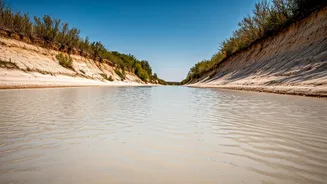
a distinctive nickname: the 'River of Milk.' This captivating title isn't derived from any dairy products but stems from a remarkable natural characteristic. The name 'Palar' itself is a blend of two Tamil words, 'pal' meaning milk and 'aru' signifying river, directly referencing the river's appearance. Its waters, often combined with the light-hued sand on its bed, can create an illusion of flowing milk, a phenomenon that has fascinated people for generations and cemented its unique place in the landscape.
Flowing Through States
The Palar River embarks on a significant journey across South India, traversing through three distinct states and contributing to their ecosystems and livelihoods. Originating in the verdant Nandi Hills of Karnataka, the river carves a path for approximately 93 kilometers within this state. Subsequently, it gracefully enters Andhra Pradesh, flowing for a shorter stretch of about 33 kilometers. Its longest passage, however, is through Tamil Nadu, where it meanders for an impressive 222 kilometers. In Tamil Nadu, the Palar plays a crucial role in districts such as Vellore, Ranipet, and Kanchipuram, before eventually meeting the Bay of Bengal just south of Chennai. Its total length is around 348 kilometers, a substantial course that sustains diverse communities along its banks.
Reasons for Milky Hue
The evocative 'River of Milk' moniker is attributed to a confluence of fascinating natural elements. Firstly, the riverbed is generously composed of quartz and feldspar rocks, which, as they erode, produce a fine, light-colored sand that shimmers like milk under sunlight. This distinctive sandy surface is a primary contributor to the river's appearance. Furthermore, in many stretches, the Palar exhibits a unique characteristic of flowing as an underground river, earning it the ancient moniker 'Guptagamini,' meaning 'hidden river.' During the monsoon, when surface water is abundant, it mingles with this white sand, enhancing the milky visual. The water itself is notably clear and sweet, owing to the mineral-rich terrain it traverses, containing elements like lime and calcium. This purity, in ancient times, was often likened to the pristine quality of milk. Its sandy expanse also acts as a natural reservoir, absorbing rainwater and replenishing groundwater, vital for arid regions and making it a nurturing lifeline for the dry districts of Tamil Nadu, much like a mother figure.