









The Drishti Satellite Innovation
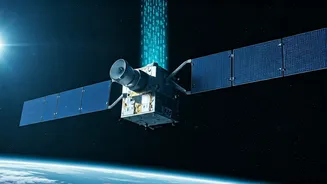
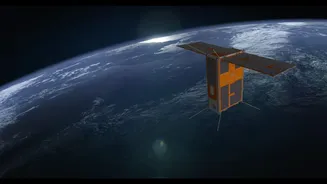
The Indian space sector has achieved a remarkable milestone with the development of Drishti, a satellite engineered by a domestic startup. What sets Drishti apart
is its pioneering Opto-SAR technology, a fusion of two distinct imaging capabilities previously housed in separate satellites. Traditional Earth observation satellites typically rely on either multi-spectral or hyper-spectral optical imaging, akin to a regular camera, or Synthetic Aperture Radar (SAR). While optical images offer clarity and ease of interpretation, they are significantly hampered by cloud cover and darkness. Conversely, SAR can penetrate clouds and operate day or night, but its data is less intuitive and requires expert analysis, much like deciphering an X-ray. A further challenge with separate systems is the spatial and temporal misalignment; optical sensors might capture one location while SAR captures another, or there can be significant time gaps between captures, posing issues for time-sensitive applications. Drishti tackles these limitations head-on by integrating both optical and SAR sensors onto a single platform, enabling them to capture images of the same area simultaneously. This synchronized approach eliminates the need for manual data alignment and processing, delivering readily analyzable, high-resolution imagery that is both clear and resilient to weather conditions.
Advancing Imaging Synergy
The brilliance of Drishti lies in its ability to overcome the inherent limitations of conventional satellite imaging technologies. Optical sensors provide visually rich data, essential for identifying features and understanding ground conditions, but they falter under atmospheric interference like dense clouds or during nighttime. SAR, on the other hand, utilizes radio waves to 'see' through clouds and in darkness, offering consistent coverage. However, SAR images often lack the immediate interpretability of optical photos and require specialized software and skilled analysts to extract meaningful information. Furthermore, the parallax effect, where different sensors view the Earth from slightly different angles, and temporal disparities, where images are captured at different times, have historically created complexities when combining data from separate optical and SAR satellites. GalaxEye's Drishti satellite ingeniously resolves these issues by housing both sensor types on a single spacecraft. The satellite is designed to precisely coordinate these sensors, ensuring they capture the same geographical area at the exact same moment. This unification of data streams means users receive a single, coherent dataset that merges the aesthetic clarity of optical imagery with the all-weather, penetrating capability of SAR, presenting analysis-ready information directly.
Technical Prowess and AI Integration
The sophisticated capabilities of the Drishti satellite are further enhanced by advanced onboard and ground-based software employing cutting-edge Artificial Intelligence (AI) models. These AI algorithms are specifically developed to achieve sub-pixel co-registration, meaning they can precisely align data points from both the optical and SAR sensors down to a fraction of a pixel. Additionally, the system incorporates jitter correction mechanisms to mitigate any minor movements or vibrations during image capture, ensuring the utmost accuracy and stability of the collected data. This intricate process guarantees that every single piece of data acquired by both sensors is meticulously captured and processed as an integral part of one unified, cohesive dataset. This technological integration not only streamlines the data analysis process but also significantly boosts the reliability and utility of the Earth observation data. The reliance on AI for such precise data fusion is a testament to the evolving landscape of space technology, where intelligent systems are playing an increasingly crucial role in maximizing the value derived from satellite missions for a wide array of applications.
Addressing Tropical Challenges
The unique design and capabilities of the Drishti satellite are particularly relevant to regions facing challenging atmospheric conditions, such as India. Many established satellite imaging companies have historically been based in Western countries where weather patterns are often more predictable, and skies tend to be clearer. These regions typically experience less frequent and less persistent cloud cover, making traditional optical imaging more consistently effective. In contrast, countries in tropical zones, like India, contend with significantly more variable weather, including prolonged periods of dense cloud cover that can obscure ground features for extended durations. This makes relying solely on optical sensors impractical for many critical applications. Drishti's Opto-SAR technology directly addresses this disparity by providing a robust solution that is not compromised by cloud interference. Its ability to deliver clear, reliable imagery regardless of weather conditions makes it an invaluable asset for these regions, enabling consistent monitoring and analysis of vital resources and environmental changes, thereby supporting national development and disaster response efforts with unprecedented effectiveness.
India's Evolving Space Ecosystem
The successful development and launch of Drishti by GalaxEye highlight the dynamic growth and increasing sophistication of India's private space sector. This initiative aligns with a broader national push to foster innovation and private participation in space exploration and applications. Beyond GalaxEye, other Indian startups are making significant strides. Skyroot Aerospace is poised to launch Vikram-1, a multi-stage launch vehicle designed to carry payloads up to 350 kg into low Earth orbit. Vikram-1 distinguishes itself with its construction from carbon composite materials and the integration of a 3D-printed, indigenously developed engine, streamlining manufacturing and reducing costs. Pixxel, another prominent space-tech startup, is partnering to develop India's first orbital data center satellite, The Pathfinder, which will house advanced GPUs for AI model training and inference, mirroring terrestrial data center capabilities. Agnikul Cosmos has achieved a major feat by successfully testing its first sub-orbital vehicle powered by Agnilet, a single-piece 3D-printed semi-cryogenic engine, launched from India's first private launch pad. These advancements, supported by government initiatives like IN-SPACe, signify a robust and rapidly expanding private space ecosystem in India, poised to contribute significantly to the global space economy.