


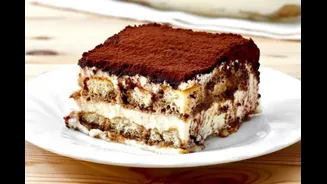

What Is Tiramisu?
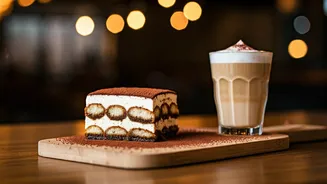
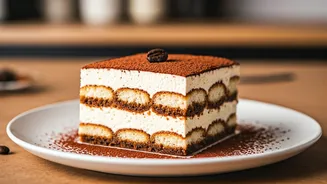
At its heart, Tiramisu is a no-bake Italian marvel, a symphony of carefully layered components. It begins with savoiardi biscuits, commonly known as ladyfingers,
which are gently dipped in chilled espresso, infusing them with a rich coffee essence. These coffee-kissed biscuits form the base for a luscious cream created from egg yolks whisked with sugar until they achieve a pale, frothy consistency, then delicately folded into mascarpone cheese. This velvety mascarpone mixture is layered with the espresso-soaked ladyfingers. The entire creation is then crowned with a generous dusting of bitter cocoa powder. The magic of Tiramisu truly unfolds when it's allowed to rest and chill, allowing the flavors to meld and the textures to set into a delightful state between a custard and a mousse. The name itself, Tiramisu, translates from Italian to 'pick me up' or more literally 'carry me upward,' a fitting description for the energizing blend of coffee, sugar, and egg that forms its soul, offering a spirit-lifting experience with every spoonful.
A Contested History
The origin of Tiramisu is a topic steeped in delightful contention, a culinary debate that has long engaged and, at times, exhausted enthusiasts. The most widely embraced narrative traces its creation back to the early 1970s at Alle Beccherie, a restaurant situated in Treviso, a city nestled in Italy's Veneto region. Chef Roberto "Loli" Linguanotto and the restaurant's proprietor, Ado Campeol, are prominently credited with formalizing the recipe that the world now recognizes. The Campeol family has diligently upheld this claim for many years, with Massimo Linguanotto, Roberto's son, continuing this legacy by serving on the jury for the annual Tiramisu World Cup in Treviso. However, an older and perhaps more intriguing backstory hints at a proto-Tiramisu known as "lo sbatudin." This was a rustic peasant preparation from the Veneto countryside, dating back at least to the 18th century, involving egg yolks beaten with sugar to a frothy state. This simple, energy-dense mixture was consumed on its own or used to dip biscuits. Some food historians suggest that a version of this proto-Tiramisu, incorporating egg yolks, sugar, savoiardi biscuits, and Marsala wine, might have been served in 19th-century Northern Italian brothels as an invigorating pick-me-up for clients. While the historical accuracy of this latter tale is debated, it adds an undeniable allure to Tiramisu's past. Regardless of the precise lineage, it's clear that a skilled pastry chef eventually combined the essential elements—espresso, mascarpone, egg yolks, ladyfingers, cocoa—to create the distinct and universally beloved dessert we savor today, with the 1970s Alle Beccherie version becoming the definitive global standard.
The Core Six Ingredients
The essence of authentic Tiramisu is meticulously defined by the Accademia del Tiramisù, based in Treviso, which codifies the original recipe into precisely six foundational ingredients. These essential components are mascarpone cheese, eggs, sugar, ladyfinger biscuits, coffee, and bitter cocoa powder. Notably, this purist approach excludes alcohol, cream, and vanilla, emphasizing the unadulterated flavors of the core elements. This strict codification arises from the passionate culinary disputes that Tiramisu seems to ignite. Debates rage over numerous aspects of its preparation: whether to incorporate egg whites, the necessity of adding whipping cream versus relying solely on mascarpone for richness, the inclusion and type of alcohol (Marsala, rum, or none), the specific biscuit used (savoiardi versus thinner Pavesini), and the temperature of the coffee (hot or cold). Purists advocate for room-temperature mascarpone, egg yolks beaten to a pale consistency, biscuits lightly dipped in cold coffee, and cocoa sifted at the very end. Conversely, experimentalists argue that Tiramisu's spirit lies in its adaptability, suggesting that most variations are acceptable as long as the fundamental character of the dessert is preserved. This duality of strict adherence and creative freedom is precisely what keeps Tiramisu a subject of ongoing, engaging conversations and inspires a continuous stream of novel recipes.
The Sweetest Competition
Annually in October, the city of Treviso transforms into a global hub for dessert aficionados, hosting the Tiramisu World Cup (TWC). Established in 2017, this competition is exclusively open to amateur home cooks from around the world and has rapidly evolved into a uniquely charming and genuinely competitive culinary event. The inaugural event in 2017 drew an impressive 720 participants from Italy and abroad, garnering significant media attention. The competition has seen consistent growth since its inception. The structure is designed for inclusivity, featuring two distinct categories: the Original Recipe, which strictly adheres to the classic six ingredients without any additions, and the Creative Recipe, where mascarpone, eggs, coffee, and cocoa powder are mandatory, but up to three additional ingredients are permitted. Judges undergo a 15-question quiz on the competition rules prior to participating. The event has yielded remarkable culinary innovations; for instance, in 2019, a mojito tiramisu won the Creative category, and in 2021, participants were challenged to incorporate the concept of cinema into their creations. The judging roles are voluntary and unpaid, attracting individuals driven by their profound love for Tiramisu. Interestingly, approximately 75 percent of the contestants are women, and a waiting list system for participants who cannot attend on the day ensures a fair chance for others.
Innovative Variations
Tiramisu's widespread acclaim has spurred a diverse array of inventive variations, ranging from subtle tweaks to truly ambitious reinterpretations. Among the most widely accepted non-traditional versions are those that experiment with the liquid used for soaking the ladyfingers. A Limoncello Tiramisu, for instance, substitutes espresso with a blend of milk and lemon liqueur, resulting in a pale, aromatic dessert particularly suited for warmer months. Matcha Tiramisu, gaining popularity in Japan and increasingly in India, employs cold matcha tea instead of coffee, lending the dessert a distinctive green hue and a slightly bitter, grassy flavor profile that contrasts pleasantly with the sweet cream. For those seeking a caffeine-free option, Strawberry Tiramisu entirely foregoes coffee in favor of a fresh strawberry coulis, creating a lighter, fruit-forward variation. Other creative adaptations include s'mores Tiramisu, cherry Tiramisu, and Tiramisu made with panettone bread in place of ladyfingers. In India, particularly, Tiramisu has been artfully adapted with a local flair. Filtered coffee Tiramisu, utilizing the robust South Indian filter coffee decoction, stands out as a particularly natural and excellent adaptation, its intense bitterness complementing the mascarpone beautifully. Some Indian fusion bakeries have introduced cardamom-spiced mascarpone cream, a fusion that harmonizes perfectly with coffee's aroma. During mango season, Mango Tiramisu, incorporating Alphonso pulp, emerges as a delightful seasonal creation in cities like Mumbai and Pune.
Tiramisu's Indian Appeal
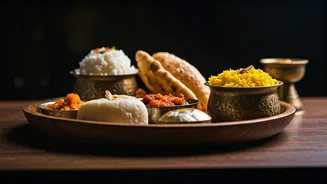
Tiramisu has seamlessly integrated into the dessert landscape of Indian cities, a testament to its universal appeal, and several factors contribute to its success. Its flavor profile is remarkably accessible to Indian palates; coffee is a widely appreciated taste across the country. While mascarpone cheese is not a traditional Indian ingredient, its mildness and creamy texture are easily embraced. The sweetness level of a well-prepared Tiramisu is typically moderate, avoiding the cloying intensity sometimes found in other imported Western desserts. Furthermore, the textural contrast between the soft cream and the yielding biscuit offers a familiar sensation to anyone who has enjoyed a well-made trifle or firni. Commercially, Tiramisu also travels exceptionally well. Sealed cups and individual portions are now commonplace in cafes and dessert stores throughout major Indian metropolises. Its no-bake nature allows for large-scale production without the need for specialized equipment or extensive commercial kitchen facilities. The primary challenge has historically been the availability and cost of mascarpone. While imported versions were once prohibitively expensive in India, domestic producers have significantly improved in recent years. The quality of Indian-made mascarpone now readily available in premium grocery stores is entirely adequate for crafting a delicious homemade Tiramisu, and the price difference compared to imported alternatives has substantially narrowed.