




Grand Canyon's Vastness
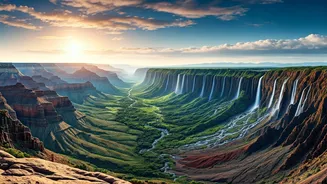
Millions of years in the making, the Grand Canyon is an immense testament to the Colorado River's persistent work. This 277-mile expanse in northern Arizona
serves as a geological archive, with rock layers revealing Earth's history dating back nearly two billion years. Visitors flock to witness its grandeur, with the South Rim Trail offering accessible views and deeper exploration possible via the South Kaibab or Bright Angel trails. For the most pleasant experience, plan your visit during the spring or autumn months, though early winter can provide a less crowded and equally beautiful alternative.
Nāpali Coast's Drama
The Nāpali Coast on Kauaʻi, Hawaiʻi, presents a dramatic 17-mile stretch of shoreline characterized by towering emerald cliffs and lush valleys that meet the vibrant blue ocean. Accessing this sacred area is possible via boat, helicopter, or a challenging hike. To truly appreciate its splendor without navigating strict visitor regulations and permit requirements, booking a guided tour is highly recommended. Alternatively, a visit to the National Tropical Botanical Garden nearby offers insight into the region's rich plant life. Summer, particularly from June to August, offers the calmest seas, though late spring and fall can provide fewer crowds.
Alaska's Brooks Range
Alaska boasts numerous natural marvels, but the Brooks Range stands out for its remote beauty and significant biodiversity. These approximately 9,000-foot snow-capped mountains, situated above the Arctic Circle, are a crucial migratory path for hundreds of thousands of caribou and a prime location for viewing the Northern Lights. Within this vast wilderness lie Gates of the Arctic and Kobuk Valley National Parks, offering opportunities for secluded adventures like hiking, rafting, and fishing. Consider joining a dog sledding tour from Wiseman, Alaska, for a unique perspective. The summer months (June to September) are ideal for outdoor activities, while winter offers the chance to experience dog sledding.
Antelope Canyon's Light
Antelope Canyon in Arizona is a world-renowned slot canyon system on Navajo land, celebrated for its striking beauty, particularly when sunlight pierces its narrow passages. The swirling, sculpted sandstone walls create an almost ethereal atmosphere, especially during midday when light beams illuminate the pathways. To experience this wonder, a guided tour is mandatory, with specialized photography tours available for those seeking the perfect shots. The ideal times to visit are spring and fall, with visits between 11 a.m. and 1 p.m. offering the most dramatic light displays.
Crater Lake's Depths
Crater Lake National Park in Oregon showcases a breathtakingly deep and remarkably clear cobalt-blue lake, cradled by steep volcanic crags. Formed by a massive volcanic eruption approximately 7,700 years ago, its origin adds to its mystique. Most visitors enjoy the views from trails like Watchman Overlook, while some brave the cold for a swim in designated areas such as Cleetwood Cove. Summer provides the most favorable weather conditions and full access to park amenities, including tours and the Crater Lake Trolley.
Badlands' Otherworldly Landscape
Badlands National Park in South Dakota presents a landscape that evokes images of Mars, with over 240,000 acres of rugged formations, eroded buttes, and extensive fossil beds. This unique terrain is also a sanctuary for wildlife, including bison, prairie dogs, and bighorn sheep. Panoramic vistas can be enjoyed from Pinnacles Overlook, Big Badlands Overlook, and along the Door Trail. Late spring and autumn offer comfortable temperatures for exploring this extraordinary wonderland.
Niagara Falls' Power
The thunderous roar of Niagara Falls precedes the sight of 3,160 tons of water plunging over cliffs each second. As America's oldest state park, it straddles the U.S.-Canada border and offers multiple viewpoints and experiences, including boat tours that take you to the base of the falls. Visitors can witness this natural spectacle from either the American or Canadian side, with iconic boat trips like the Maid of the Mist departing from New York. While accessible year-round, the period from late spring through fall provides the most pleasant weather for exploration.
Hawaii Volcanoes' Fire
Hawaii Volcanoes National Park on the Island of Hawaiʻi offers an unparalleled opportunity to witness the Earth's geological forces at play, featuring two of the planet's most active volcanoes: Kīlauea and Mauna Loa. While eruptions are unpredictable, visitors can often observe steam venting from numerous locations across the park. Beyond the volcanoes themselves, exploration includes walking through lava tubes and traversing volcanic landscapes. For a unique stay, the Volcano House offers lodging on the rim of Kīlauea caldera. The months of March through September are generally best for visits, and staying after sunset or arriving before sunrise allows for viewing the volcanic glow.
Cumberland Falls' Moonbow
Often called the "Niagara of the South," Cumberland Falls State Resort Park in Kentucky boasts a 125-foot-wide waterfall and impressive gorge scenery. Its unique claim to fame is being one of the premier locations globally to witness a lunar rainbow, or moonbow. This rare phenomenon occurs during, or just before and after, a full moon, when moonlight refracts through the mist of the falls. While visible year-round, winter months often provide the most favorable conditions for viewing this ethereal spectacle, which is best captured with a camera or phone.
Bryce Canyon's Hoodoos
Bryce Canyon National Park in Utah is famed for its staggering collection of hoodoos, unique rock spires that create a landscape unlike any other. This park is home to one of the largest concentrations of these formations worldwide, complemented by vibrant orange canyons and diverse forests. The park also supports a variety of wildlife and offers breathtaking night sky views due to its high altitude, ranging from 8,000 to over 9,000 feet. Late spring through early fall is ideal for comfortable weather, though visiting in winter allows for a unique perspective of the snow-dusted hoodoos.
Florida's Coral Reef
Stretching approximately 350 miles from Jupiter to the Dry Tortugas National Park, Florida's Coral Reef is the only contiguous coral reef system in the U.S. This vibrant underwater ecosystem teems with a diverse array of marine life, including spiny lobsters, sea turtles, dolphins, octopuses, sharks, and various fish species. The best way to experience this underwater paradise is through diving or snorkeling tours, many of which depart from the Florida Keys. To ensure the health of the reef, responsible tourism practices are encouraged. The period between March and May offers pleasant weather and fewer crowds, although the peak season runs from December to March.
Great Sand Dunes' Giants
Great Sand Dunes National Park in Colorado features North America's tallest sand dunes, creating a dramatic desert landscape against the backdrop of the Sangre de Cristo peaks. This expansive park is also a habitat for diverse wildlife, including black bears and mountain lions. Hiking directly onto the dunes, some reaching over 700 feet, provides an exhilarating, albeit strenuous, experience, with rewards like spectacular sunrise and sunset views. For a less demanding perspective, visitors can ascend partway or enjoy the scenery from accessible points like Piñon Flats Campground. Late spring and fall offer the most comfortable temperatures for exploration, as summer can be intensely hot.