






The Sacred Day
Ekadashi, occurring twice monthly during both the waxing (Shukla Paksha) and waning (Krishna Paksha) phases of the moon, is a profoundly auspicious occasion
in the Hindu faith dedicated to the worship of Lord Vishnu. Apara Ekadashi, specifically, is observed on the eleventh day of the Krishna Paksha in the month of Jayeshtha. In the year 2026, this significant fast will be undertaken on May 13th, a day steeped in spiritual devotion and the pursuit of divine favor. Understanding the precise timing of the Ekadashi tithi is crucial for devotees to adhere to the fast correctly. The Ekadashi tithi will commence on May 12, 2026, at 02:52 PM and conclude on May 13, 2026, at 01:29 PM. This duration defines the period of fasting, culminating in the 'parana' or breaking of the fast.
Breaking the Fast
The culmination of the Apara Ekadashi fast is marked by the 'parana' ceremony, which signifies the breaking of the fast on the subsequent day, Dwadashi. For 2026, the opportune window for this sacred ritual is scheduled from May 14th, 2026, beginning at 05:31 AM and extending until 08:14 AM. It is important to note the Dwadashi end moment, which falls on May 14, 2026, at 11:20 AM. Adhering to these timings ensures the spiritual integrity of the observance. Devotees should aim to complete the parana within the specified auspicious hours. Those who find the prolonged fast challenging are permitted to consume sattvik food in the evening of the Dwadashi, provided it aligns with traditional guidelines.
Spiritual Significance Revealed
Apara Ekadashi carries immense religious and spiritual weight within Hinduism, recognized as a highly propitious day according to ancient scriptures. The name 'Apara' itself translates to 'infinite,' reflecting the boundless blessings associated with this observance. Lord Krishna himself expounded the significance of Apara Ekadashi to Yudhishthir, the eldest of the Pandavas, highlighting its power to overcome adversities, including the challenges faced during the Mahabharata war. Devotees who undertake this fast with sincerity and purity are believed to receive Lord Vishnu's divine grace, leading to the fulfillment of their earnest desires and protection from negative karma. This fast is considered a potent method for cleansing the body, mind, and spirit, offering a path to spiritual purification. It is believed to bestow happiness, health, prosperity, and all worldly comforts, and ultimately guide the devotee to Vaikunth Dham, the celestial abode of Lord Vishnu.
Sacred Worship Practices
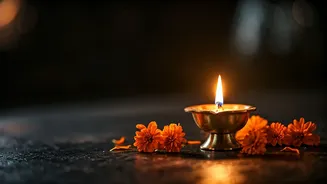
The worship during Apara Ekadashi involves a series of devotional practices aimed at pleasing Lord Vishnu. The day typically begins with a holy bath, ideally during the Brahma Muhurat, signifying spiritual purification. Following this, deities such as Laddoo Gopal Ji, Lord Krishna, and Lord Vishnu are offered a sacred bath. A ghee lamp is lit, and an idol of Lord Vishnu is placed on a wooden plank. The idol is then adorned with yellow sandalwood tilak and a garland of yellow flowers, followed by an offering of Panchamrit, a mixture of five nectars. Devotees then engage in chanting the mantra 'Om Namo Bhagavate Vasudevaye' 108 times, accompanied by offerings of Tulsi leaves, seasonal fruits, and dry fruits. Reciting the Lord Vishnu Aarti is also a vital part of the worship. Visiting a Vishnu temple to seek blessings is highly recommended. The fast is broken on the following day, Dwadashi, after the designated parana time.
Chants for Blessings
To enhance the spiritual efficacy of Apara Ekadashi observance, specific mantras are chanted by devotees seeking the blessings of Lord Vishnu. The primary and most revered mantra is 'Om Namo Bhagavate Vasudevaye,' a powerful invocation directed at Lord Vishnu. Another significant chant is 'Shri Krishna Govind Hare Murari, Hey Nath Narayan Vasudeva,' which addresses Lord Krishna in his various divine forms. The mantra 'Achyutam Keshvam Krishna Damodaram, Ram Narayanam Janki Vallabham' is also widely recited, encompassing a wider pantheon of divine names. Finally, the powerful Maha Mantra, 'Hare Rama Hare Rama Rama Rama Hare Hare, Hare Krishna Hare Krishna Krishna Krishna Hare Hare,' is an integral part of devotional practices during this period, fostering a deep connection with the divine.