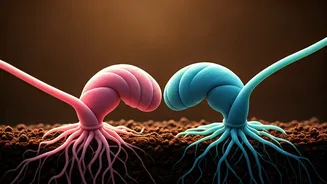







Love's True Measure
Many believe that the intensity of affection dictates relationship success, but this is a common misconception. True longevity in love isn't about passionate
outbursts; it's about consistent effort and commitment. Couples who endure are those who actively demonstrate their care through daily actions rather than relying solely on grand declarations. They consistently place their partner's well-being and feelings above personal pride, understanding that relationships aren't arenas for winning arguments. Every disagreement isn't a battle to be won, and choosing to de-escalate or compromise is far more beneficial for the partnership's health than asserting dominance.
The Fleeting Nature of Feelings
The initial stages of romance, often characterized by exhilarating feelings, are easy to fall into. With the advent of modern communication, it’s simpler than ever to connect and experience the intoxicating rush of new love. The fluttery stomach, the constant stream of messages, the charged atmosphere of every shared moment – this phase is undeniably exciting. However, the critical, often unspoken, truth is that these intense emotions are transient. The question then arises: how long will this initial euphoria last? Whether it's a month, six months, a year, or two, the real challenge begins when the honeymoon phase inevitably wanes, revealing that love alone is insufficient to sustain a long-term bond.
Foundations of Connection
If passionate feelings aren't the sole glue, what truly keeps two people together? The secret to lasting partnerships lies in a different set of attributes, often overlooked by romantic comedies. These aren't skills one can simply force or learn overnight; they are qualities that are nurtured and continuously practiced. The core elements that bind couples are profound connection, deep intimacy, unwavering safety, and solid trust. These qualities aren't accompanied by the initial rush of butterflies; rather, they are painstakingly built over time, often through deliberate and conscious effort from both individuals involved.
Intentions vs. Actions
It's common for individuals to believe they already possess these foundational elements or that their pure intentions are enough. However, in the realm of relationships, intentions hold virtually no weight when disconnected from actions. While declaring 'I love you' is simple, the true test lies in whether your behavior aligns with those words. When challenges arise, do you function as a supportive team member, willing to set aside your ego? Do you genuinely demonstrate care, love, value, and prioritization towards your partner? It's entirely possible to have good intentions yet inadvertently cause significant damage to the relationship, which is often the most painful realization.
Ten Crucial Questions
To truly gauge the health and strength of a relationship, a deep dive into self-reflection and open communication with your partner is essential. Here are ten pivotal questions to explore: 1. Do you demonstrate mutual respect, especially during difficult times? 2. Does your partner feel genuinely valued, and do you actively contribute to that feeling? 3. Are you consciously choosing to care, or are you on autopilot, assuming love suffices? 4. Do you verbally express appreciation, ensuring your partner knows their value? 5. Is there a balanced give-and-take, or is the effort lopsided? 6. Can you take responsibility for mistakes without escalating drama? 7. Can you collaboratively resolve conflicts, or do you worsen them or avoid them? 8. Do you listen when your partner expresses hurt, or do you become defensive? 9. Are you capable of being vulnerable and honest without pretense? 10. Do you provide a secure environment for your partner to express their needs for feeling loved?