








Re-balancing Trade Concessions
Union Commerce Minister Piyush Goyal clarified the dynamics of the India-US interim trade agreement, particularly regarding the American assertion that
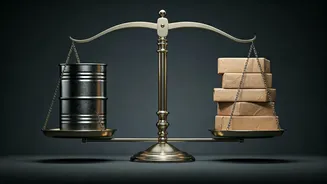
India committed to cease purchasing Russian oil. While he did not provide specific details on the oil front, Goyal emphasized a crucial aspect of all trade pacts: the inherent provision for a "re-balancing of concessions." This mechanism acts as a safeguard, allowing for adjustments if the benefits of the agreement are negatively impacted by subsequent actions. Goyal referenced World Trade Organization (WTO) rules, underscoring that such provisions are standard practice in international trade agreements. This suggests that India has a built-in recourse should any changes in its energy procurement strategies lead to unforeseen adverse effects on the trade deal's advantages. The focus remains on ensuring that the overall benefits of the agreement are preserved, even amidst evolving geopolitical and economic landscapes. This principle of mutual adjustment is key to maintaining a stable and equitable trading relationship between the two nations.
Boosting Indian Exports
The framework for the India-US interim trade deal is poised to deliver immediate advantages to India's labor-intensive goods exporters. Tariffs on these goods have already seen a significant reduction, dropping by half from 50% to 25% on February 7th, with an anticipated further decrease to 18% in the coming days. Minister Goyal expressed optimism, stating his belief that overall trade with the US will experience a substantial uplift due to these lower reciprocal tariffs. This competitive pricing advantage is expected to position Indian products favorably compared to those from China and other rival nations. Furthermore, the minister anticipates a surge in investments flowing into India as a direct consequence of this enhanced trade relationship. The improved market access and reduced trade barriers are projected to stimulate economic activity and create new opportunities for Indian businesses on the global stage.
Strategic Import Commitments
Addressing India's commitment to import goods worth $500 billion over the next five years from the US, including significant categories like energy, aircraft and parts, precious metals, technology products, and coking coal, Minister Goyal presented it as a natural progression for a rapidly growing economy. He highlighted the US's strength in these product areas and noted that India's current annual imports for these items amount to approximately $300 billion. Over the next five years, this figure is projected to reach nearly $2 trillion. Goyal articulated India's strategic intent: to increase procurement from the US to secure more competitive pricing and superior quality. This move aims to diversify India's import sources, thereby enhancing supply chain resilience and cost-effectiveness. The minister stressed that this increased import volume is not a burden but rather an opportunity for India to leverage the US's robust offerings while simultaneously benefiting its own economic development and consumers.
Navigating Tariff Reinstatement
While exporters are generally positive about the trade deal, a point of contention remains the US executive order revoking existing tariffs. This revocation is explicitly linked to India's commitment to halt purchases of Russian oil, with US President Donald Trump issuing a warning that these levies could be reimposed if such imports resume. However, the interim trade agreement framework, finalized on February 6th, appears to offer a degree of protection for India. The agreement includes a clause stipulating that if either country alters its agreed-upon tariffs, the other nation reserves the right to modify its own commitments. This mutual modification clause serves as a critical cushion, providing India with leverage and a framework for response should the US unilaterally decide to reinstate tariffs based on future oil procurement decisions. It underscores the delicate balance and the conditional nature of certain aspects of the trade pact.