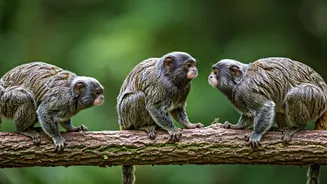

Tiny Pygmy Marmoset
The Pygmy Marmoset, a resident of South America, clinches the title of the world's smallest monkey. These petite primates are a sight to behold, typically
measuring between 4.6 to 6 inches (11.7 to 15.2 cm) in body length, excluding their tail. Weighing in at a mere 3.5 to 5.6 ounces (100 to 160 grams), they're easily palm-sized creatures. Their diet primarily consists of tree sap, which they extract using specialized teeth, supplementing it with insects and fruits. They live in small family groups, communicating through chirps and whistles. The Pygmy Marmoset's small size, combined with their arboreal lifestyle, allows them to navigate the dense forest canopy of the Amazon rainforest with ease. These adorable monkeys are a testament to the incredible diversity found within the primate family.
Golden Snub-Nosed Monkeys
Native to China, the Golden Snub-Nosed Monkey stands out with its vibrant golden fur and unique facial features. These monkeys are well-adapted to cold climates, thriving in the mountainous regions of central and southwestern China. Their diet is primarily vegetarian, consuming a variety of leaves, fruits, and seeds, which they find in the forests. They are highly social creatures, living in large troops that can sometimes number over 600 individuals. This social structure aids in protection from predators and the search for food. They are particularly known for their snub nose, giving them a distinct appearance. Sadly, habitat loss and hunting have placed them under threat, making them a vulnerable species. Their conservation is crucial, as they play an important role in the delicate ecosystem of their habitat.
Bald Uakari's Unique Look
The Bald Uakari, found in Brazil, is distinguished by its bright red face and bald head. This primate's striking appearance serves as an indicator of its health. Their red faces become brighter when they are in good health, acting like a visual signal to potential mates. They are medium-sized monkeys, living in the flooded forests of the Amazon basin. Their diet includes seeds, fruits, and insects, which they forage from the forest floor and tree branches. They usually live in large social groups, helping to protect against predators such as jaguars and eagles. The Bald Uakari’s survival is constantly threatened by habitat destruction and hunting, as the monkeys are important to maintaining a healthy ecosystem. Understanding and protecting their habitat is crucial for their continued survival.
Proboscis Monkey's Nose
Borneo is home to the Proboscis Monkey, immediately recognizable by the male's large, prominent nose. These primates are excellent swimmers and live near rivers and mangroves, where they can escape to safety when threatened. The male's large nose plays a role in attracting females. They primarily feed on leaves, fruits, and seeds found in the forests. Proboscis Monkeys have a unique social structure, with single-male groups ruling over a collection of females. They are arboreal animals, spending much of their time in the trees. These monkeys contribute significantly to the environment by dispersing seeds, aiding in the growth and renewal of forests. Because of habitat loss and hunting, the conservation of this species is essential, which allows them to flourish in their natural habitat.
Roloway Monkey of West Africa
The Roloway Monkey, a striking West African primate, is known for its distinctive appearance. They have a black face surrounded by a white beard and a long tail. They prefer rainforest environments. These monkeys are mainly arboreal, rarely descending to the ground. They are omnivores, eating fruits, leaves, insects, and seeds, which they look for in the upper reaches of the forest canopy. They live in small social groups, which usually consist of one male and several females, which helps them defend against predators, such as eagles and leopards. Conservation efforts are crucial to protect this unique species from habitat destruction and hunting, thus ensuring the Roloway Monkey's survival for future generations.
Celebes Crested Macaque
Found in Indonesia, the Celebes Crested Macaque, also known as the black ape, is famous for its distinctive crest of hair. These primates possess black fur and are very social. They mainly reside in the tropical rainforests and enjoy eating fruits, leaves, insects, and seeds. They live in social groups, helping them defend against predators and forage for food. They play a vital role in their ecosystem by spreading seeds. The Celebes Crested Macaque faces threats from habitat loss and hunting, making conservation vital. Preserving their habitat and addressing human impact can support the survival of these fascinating creatures. Their presence enriches the biodiversity of their unique Indonesian habitat.
The Titi Monkey, South America
South America hosts the Titi Monkey, a family of small primates known for their monogamous relationships. They are known for their beautiful, thick fur, with colors ranging from grey to red, and long, non-prehensile tails. They are mainly arboreal, living high in the rainforest canopy. Their diet consists of fruits, leaves, insects, and occasionally small animals. They are famous for their strong family bonds, and the pairs and their offspring sleep together, often with their tails entwined. They live in territorial family groups, defending their area from outsiders. Habitat loss and the pet trade are the main threats these monkeys face. Effective conservation strategies are essential to preserving their unique social structure and their role in the complex ecosystem of South America’s rainforests.