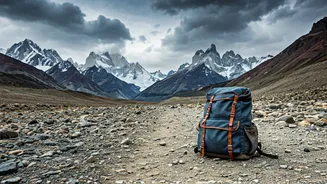







Abandonment in the Wild
In today's dating sphere, a concerning trend known as 'Alpine Divorce' has emerged, painting a grim picture of relationship endings. This practice, which
is quite literal in its execution, involves leaving a romantic partner alone and stranded in a remote or physically demanding natural environment, often as a definitive way to end the relationship. Social media platforms have been flooded with accounts from women who have experienced this alarming form of breakup. These narratives often recount excursions, such as hikes or climbs, where a male partner intentionally leaves them behind, creating a perilous situation followed by an inevitable separation. One widely shared TikTok video captured a woman's distress after being left alone during a rock-climbing activity, a sentiment echoed by numerous others who shared their own harrowing experiences of being ditched during extended outdoor journeys, with one woman recounting a difficult 12-hour trek out of the Grand Canyon after her boyfriend abandoned her.
Roots and Realities
The term 'Alpine Divorce' finds its origins in a short story penned by Robert Barr in 1893, which depicted a spouse planning a fatal hike to end a marriage. However, the modern interpretation diverges significantly from this literary precursor. While Barr's story involved a woman's self-inflicted demise to frame her husband, contemporary 'Alpine Divorce' sees the male partner as the one who disappears, leaving the woman to face potentially life-threatening circumstances. Relationship expert Thais Gibson defines it as "a modern term for abandoning a partner in a remote or physically vulnerable setting in a way that symbolically or literally ends the relationship." The concept has evolved to encompass situations that may not strictly occur in mountainous terrains but share the common thread of being stranded by a male partner in an unexpected and challenging predicament, underscoring a profound lack of regard for the other person's safety and well-being.
Driving Forces Behind the Trend
The prevalence of 'Alpine Divorce' can be attributed to a combination of factors, primarily rooted in miscommunication and a tendency towards avoidance. Much like the original story where a character resorts to extreme measures due to an inability to communicate his desire for divorce, modern 'Alpine Divorce' serves as a breakup without the need for direct conversation, mirroring the severity of ghosting. This behavior is indicative of poor emotional regulation, with individuals opting for abandonment over constructive dialogue. According to experts, such abandonment tactics often stem from insecure attachment styles, inadequate conflict resolution skills, emotional immaturity, and in some instances, abusive tendencies. Interestingly, not all instances are solely for the purpose of ending a relationship; some partners may employ this tactic as a severe test to gauge their partner's resilience and problem-solving abilities under duress. This form of 'testing' can escalate into ongoing abuse, where control, isolation, and fear-mongering become central to the dynamic, reflecting broader patterns seen in abusive relationships.