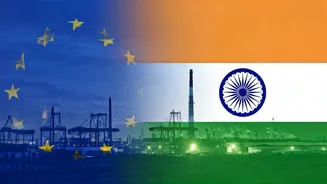

Deal's Core Elements
The India-EU Free Trade Agreement (FTA) is a significant development, encompassing various provisions designed to boost bilateral trade and investment.
A central feature of the agreement involves substantial tariff reductions. This will make it easier and more affordable for Indian goods to enter the European market, fostering greater competitiveness. Additionally, the deal seeks to facilitate improved market access for businesses on both sides. This includes streamlined regulatory processes and reduced barriers to trade, encouraging a more conducive environment for companies looking to expand their operations. The FTA covers sectors such as textiles, IT services, agricultural products, and automotive components. Furthermore, the agreement emphasizes cooperation in areas such as low-carbon technologies and sustainable development. The goal is to promote a long-term strategy for balanced and inclusive economic growth, enhancing the resilience and adaptability of both economies.
Textiles & Exports Thrive
The textile industry is expected to be a major beneficiary of the India-EU trade deal. The agreement provides duty-free access for Indian textiles to the European market. This concession will boost the competitiveness of Indian textile exporters. This translates to reduced prices for consumers in the EU. This is crucial given the existing challenges of global trade, and the opportunity for growth is significant. The pact creates a huge avenue for growth. It would encourage Indian textile manufacturers to increase production and tap into the vast European market. It should accelerate the shift toward sustainable and eco-friendly practices in textile manufacturing. This could lead to a significant increase in export volumes and create jobs. Also, it would improve the trade balance between India and the EU. Increased competitiveness will allow Indian textile producers to capture a larger share of the European market, strengthening their overall economic position. Overall, the agreement is a positive development for Indian textiles.
IT & Services Boost
The India-EU FTA is expected to provide a considerable boost to the IT sector. This deal includes provisions designed to streamline processes, making it easier for Indian IT companies to operate in the European market. The FTA is aimed at simplifying regulatory frameworks. It will encourage greater investment in India's IT sector by European companies, improving operational efficiency. It offers market diversification opportunities. This is very important as Indian IT firms can expand their presence in Europe. The agreement also addresses intellectual property rights, protecting the innovations of IT companies and fostering a more stable environment for business. This strengthens the IT sector. It also supports collaboration in research and development and promotes new technologies and innovations. Overall, the FTA strengthens the IT sector and strengthens its competitiveness in the global market. The FTA helps India become a major technology hub.
Agri Sector Gains
The agriculture sector is set to gain significantly from the India-EU FTA. This agreement includes duty concessions for various agricultural products, making Indian farm goods more competitive in the EU market. The agreement will lower tariffs on important agricultural exports. It also expands market access for Indian farmers, leading to greater sales opportunities. The FTA would encourage investments in the agricultural sector. The trade deal would foster increased cooperation in areas such as food safety and sustainable agricultural practices. It strengthens India’s position as a reliable supplier of agricultural products and improves relationships with the European Union. The FTA helps agricultural businesses in India grow their reach to Europe. It offers a big boost to farmers and food companies, encouraging them to enter the European market.
Automotive Industry Impact
The India-EU FTA will also impact the automotive industry. It brings opportunities and challenges. The deal includes provisions related to tariff reductions. This should enhance the competitiveness of Indian automotive component exports, increasing trade between the two regions. The agreement will improve market access, enabling easier entry of vehicles and components into both markets. As the deal encourages cooperation in the development and adoption of electric vehicle technologies, it also supports initiatives to make the industry eco-friendly. The FTA will strengthen economic and political ties between India and the EU, leading to more collaborations. As trade barriers are reduced, both Indian and European automakers will have better opportunities to expand their presence in each other's markets, leading to increased investment and job creation.
Economic & Political Ties
The India-EU FTA represents a significant step forward in strengthening economic and political ties between the two entities. The agreement is a move towards a more balanced and stable relationship. The FTA offers a common framework for business, trade, and investment. It also boosts diplomatic relations, showing a commitment to work together. This creates an environment for business and builds trust between India and the EU. This also boosts strategic collaborations, and strengthens international cooperation. The FTA helps reduce trade barriers and promotes sustainable growth. This helps the two entities to deal with global challenges. This deal highlights the commitment to a more prosperous and stable global order. It paves the way for strong, resilient, and enduring ties.