






January's Wolf Moon
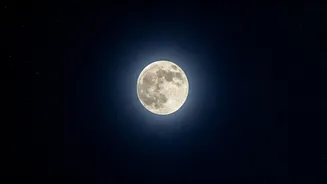
The initial full moon of 2026, known as the Wolf Moon, graces the January sky. As per folklore, this name originated from the howling wolves during the harsh
winter. It is an excellent opportunity for stargazers, especially those in regions with clear winter skies. The Wolf Moon typically provides a spectacular sight, offering crisp views due to the season's reduced atmospheric haze. It can also be a prime time to observe other celestial events that may coincide with its presence, such as the visibility of certain constellations or planets.
February's Snow Moon
February brings the Snow Moon, so named for the heavy snowfall often experienced during this month. The Snow Moon often appears large and luminous due to the Earth's atmosphere, and it presents a beautiful visual display. Clear skies, away from light pollution, are ideal to appreciate this spectacle fully. The Snow Moon might also coincide with significant celestial events, like the passage of bright stars or planets, making it a great time for enthusiasts to capture beautiful images and plan their celestial observations.
March's Worm Moon
The Worm Moon in March gets its name from the earthworms that begin to emerge from the thawing ground. The warming weather often leads to clearer skies, making it a favourable time for observing the moon. This full moon often signifies the beginning of spring, offering longer daylight hours and, consequently, more chances to gaze at the night sky. With the changing seasons, stargazers can witness the transition of constellations and potentially catch other astronomical events.
April's Pink Moon
April's full moon is known as the Pink Moon, not for its color, but to recognize the blossoming of pink wildflowers. In April, the moon rises and sets later, which could enhance the viewing experience in certain areas. With longer daylight hours becoming more prominent, the viewing opportunities shift, and the Pink Moon becomes a significant point in the sky. This period might coincide with meteor showers and other exciting astronomical occurrences, enhancing the potential for visual exploration.
May's Flower Moon
The Flower Moon, the full moon of May, lives up to its name, coinciding with the vibrant floral displays of spring. The Flower Moon is usually a time of great beauty, with the earth in full bloom. It also marks a period where the night skies are filled with activity. May's full moon is the perfect time to identify constellations, and this is where many amateur astronomers begin to take their first steps into the world of celestial observation. This could be an exceptional time to view planets and other celestial bodies in the night sky.
June's Strawberry Moon
June's full moon, called the Strawberry Moon, gets its name from the strawberry harvesting season. The Strawberry Moon presents an opportunity to see the moon during the summer, when the nights are short, but the sky is clear. This time also opens the gates for seeing planets and other celestial bodies in the sky. Observing the Strawberry Moon is also a time when you can experience the beauty of the celestial sphere.
July's Buck Moon
July brings the Buck Moon, named after the new antlers that appear on male deer during this time. The Buck Moon is often seen against the backdrop of summer, with warmer temperatures making for comfortable night sky viewing. With minimal interference from clouds, it offers clear opportunities to examine other celestial events and features. The Buck Moon allows for a rich and varied experience for all stargazers to engage with the night sky.
August's Sturgeon Moon
August features the Sturgeon Moon, named after the abundance of sturgeon fish. This full moon gives stargazers clear access to the celestial wonders of the late summer night sky. The conditions are perfect for exploring the night sky, and they provide an unobstructed look at the constellations and various other celestial activities. The Sturgeon Moon is a great opportunity to explore the depths of our galaxy and observe its beauty.
September's Harvest Moon
September's Harvest Moon, perhaps one of the most famous full moons, is essential for its proximity to the autumnal equinox. The Harvest Moon rises soon after sunset, providing extra light for farmers to work. In September, the moon appears larger and brighter, which is a great time to study the different features of the lunar surface. The Harvest Moon is, for many, the official start of the stargazing season, which provides a comfortable and rewarding way to engage with the night sky.
October's Hunter's Moon
October's Hunter's Moon follows the Harvest Moon and gets its name from the hunting season. The Hunter's Moon offers spectacular views against the backdrop of changing autumn leaves. The season is ideal for stargazing, with crisper air and clear nights. Viewing this moon allows you to experience the natural beauty that autumn has to offer while appreciating the night sky. In October, there are various events for amateur stargazers to catch and observe, making it a perfect month for viewing the Hunter's Moon.