





Butterfly Haven Basics
Creating a space for butterflies in an Indian city home is more achievable than you might think, even with minimal room on a balcony, terrace, or courtyard.
The key lies in selecting the right native plants and giving them adequate care. Success hinges on a thoughtful balance of essential needs: sunlight, water, and sufficient space for growth, all while ensuring the plants are suited to the local climate and appealing to butterflies. In urban environments where space is a premium, even a modest collection of thriving, flowering plants can significantly enhance the garden's atmosphere. Such a garden becomes a lively ecosystem, benefiting not only its human inhabitants but also vital pollinators, fostering a connection with nature amidst the urban bustle. With careful plant selection and consistent maintenance, a small urban outdoor area can evolve into a crucial, albeit tiny, sanctuary for biodiversity.
Lantana: Low Maintenance Charm
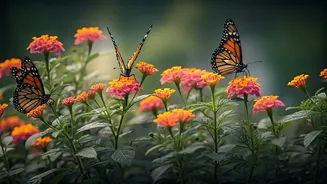
Lantana stands out as an exceptionally adaptable flowering plant, renowned for its prolonged blooming periods and its magnetic pull for a variety of butterflies. This hardy species flourishes in warm climates, making it particularly well-suited for the demanding conditions often found in Indian cities, largely due to its minimal care requirements. To ensure vigorous growth and abundant blooms, plant Lantana in a location that receives ample sunlight and water it only sparingly once the plant has established its roots. It is versatile in its placement, capable of thriving both in containers or when used to create decorative borders. However, it's important to manage its growth through regular pruning, as Lantana has a tendency to spread quite rapidly and can become unruly if left unchecked, thus maintaining its shape and vigor for continuous butterfly attraction.
Ixora: Vibrant Clusters
Ixora is a delightful choice for attracting butterflies, producing abundant clusters of small, vividly colored flowers that pollinators find irresistible. This plant thrives best when exposed to ample sunlight and warm temperatures, preferring soil that is slightly acidic yet well-drained. Within the confines of city living, Ixora adapts beautifully to life in pots or larger planters, making it a perfect fit for urban gardens. Consistent watering is essential, especially throughout the hotter summer months, but it's crucial to avoid waterlogged conditions that can harm the roots. Enhancing the soil with a light application of compost periodically will greatly contribute to its health and ensure a continuous display of blossoms, providing a reliable food source for butterflies.
Parijat: Night's Fragrance
Parijat, affectionately known as the night-flowering jasmine, is a truly exquisite native tree or sizable shrub that aligns wonderfully with India's diverse climate. It flourishes under direct sunlight and requires well-draining soil, demonstrating a clear aversion to waterlogged conditions. In a city garden setting, Parijat can be successfully cultivated either in a spacious container or planted directly into the ground, provided sufficient space is available. Regular watering is recommended on dry days to maintain soil moisture, and occasional enrichment with compost will provide the necessary nutrients to support its abundant flowering. Its unique nocturnal bloom and sweet fragrance offer a different dimension to a butterfly garden.
Kaner: Heat Tolerant Shrub
Kaner, commonly recognized as oleander, is a popular flowering shrub frequently observed in urban Indian landscapes. It exhibits robust growth in full sun and possesses a remarkable ability to withstand heat once it has acclimatized to its environment. For optimal growth in pots, ensure excellent drainage is provided, and maintain a moderate watering regimen, allowing the soil to dry out slightly between watering sessions. Regularly removing spent flowers serves as a stimulus for the plant to produce more new blooms. Given its potential to develop into a substantial shrub, gentle pruning is advisable to maintain its structural balance and shape. Special attention should be paid to avoid overwatering, particularly during periods of high humidity, to prevent common issues.
Hibiscus: Easy Blooms
Hibiscus stands out as one of the most straightforward flowering plants to cultivate for attracting both butterflies and birds, offering large, showy blooms that are a favorite among pollinators. It thrives in abundant sunlight and requires regular watering, but it's vital that the soil does not remain constantly saturated. A sunny balcony or terrace presents an ideal location for this plant. Periodic feeding with compost will nourish the plant and encourage vigorous growth, while light pruning helps promote fresh foliage and an increased number of flowers. It is best to select a pot of adequate size, as hibiscus performs optimally when its root system has ample room to expand. The generous size and vibrant colors of its blossoms make it a particularly appealing nectar source.