



The Unseasonable Warmth
March in Ladakh, typically a frigid month ideal for spotting the elusive snow leopard, presented an unexpected warmth. This unusual weather shift, a symptom
of the region's accelerated warming at nearly twice the global average, directly impacts the delicate ecosystem. Traditional mud houses, designed for stable weather patterns, are now vulnerable to landslides and floods, while water scarcity looms. This phenomenon forces wildlife, including snow leopards, wolves, and blue sheep, to ascend higher into the mountains. This warming trend is a critical concern for the 'Third Pole,' a vast reservoir of glaciers outside the Arctic and Antarctic, with far-reaching consequences beyond Ladakh itself. The unseasonable conditions also affect the local communities, like Tsering Dolker, who have adapted their livelihoods, with entrepreneurs now adding value to the world's finest wools within Ladakh itself, using traditional backstrap looms.
Signs of Change
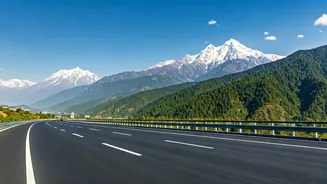
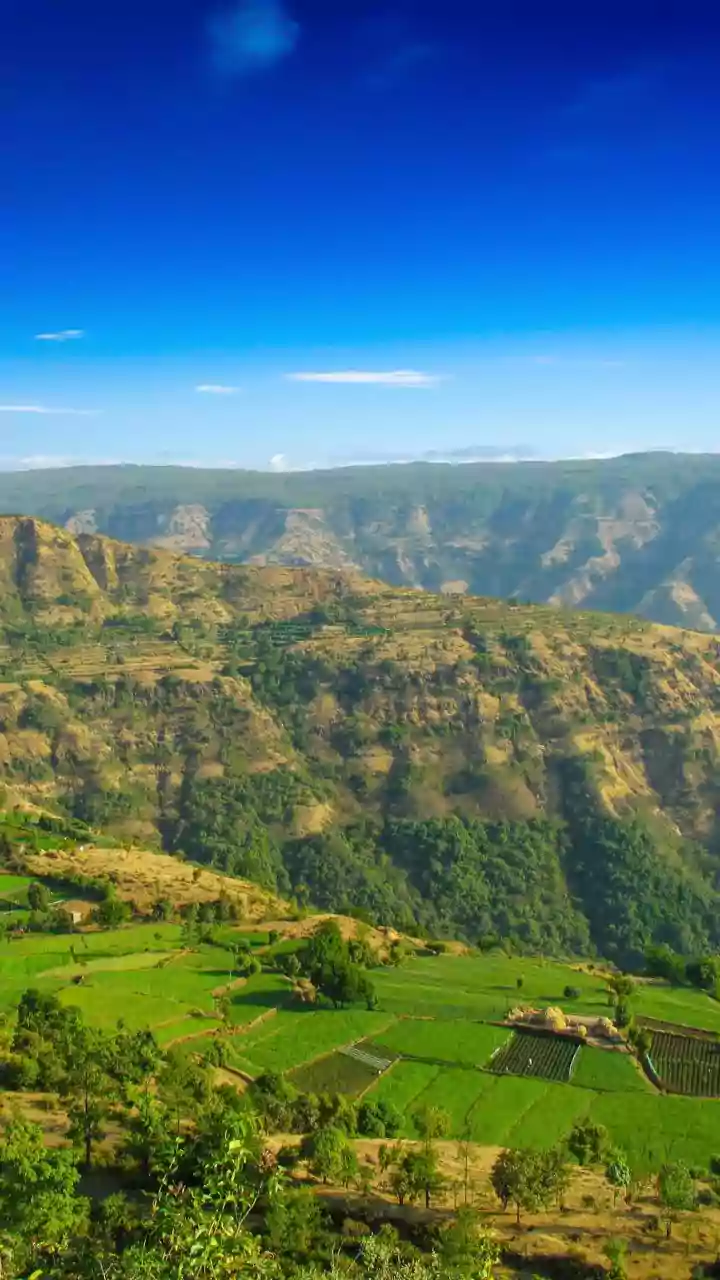
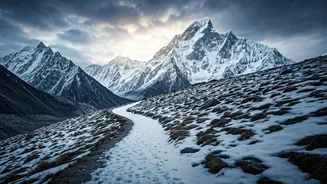
Beyond climate shifts, Ladakh faces increased pressure from human activity. The significant presence of army and police forces in this sensitive border region has led to the development of more infrastructure, including roads, buildings, and increased vehicle traffic. This, coupled with a post-pandemic tourism surge facilitated by new transport links, has introduced urban noise into the once-profound silence of the ancient land. Waste generation and demand for resources like water have also escalated. Despite these challenges, the journey into the mountains, following the paths of blue sheep and their predators, reveals stunning vistas of lilac and jade slopes beneath snow-capped peaks. The unique geological formations and landscapes, sculpted by the Indus and Zanskar rivers, evoke a sense of deep connection and wonder, earning Ladakh its moniker, the 'Magic Land.'
Encounters with Majesty
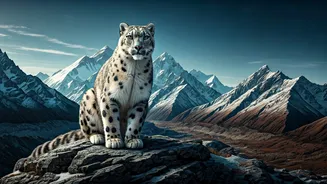
The pursuit of the snow leopard culminated in a breathtaking sighting in Rumbak Valley. Silhouetted on a ridge, the magnificent 'Shaan' was observed marking its territory and surveying the blue sheep grazing far below. The distance was overcome by the power of a camera lens, making the moment feel intimately personal before the ghost of the mountains silently vanished. The good fortune continued the following day with a sighting of a family of Eurasian lynx near Wari La. These extremely rare wild cats, even more elusive than snow leopards, included a mother and two cubs. Their camouflage made them nearly invisible against the slopes, requiring careful observation to discern their distinct ears and subtle movements. The sky above was alive with golden eagles soaring, while colourful yellow-billed choughs and magpies foraged on the ground, adding to the rich tapestry of wildlife.
Conservation Challenges
Ladakh's unique wildlife, including species found nowhere else in India, faces mounting threats to its survival. A significant danger comes from feral dogs roaming freely near settlements and hills. These packs not only hunt but also transmit canine distemper, a disease that can be fatal to wild animals, including snow leopards, leaving them vulnerable to attacks and illness. Tragically, a snow leopard was reportedly killed by dogs during the author's three-day stay in Leh. Efforts like animal birth-control programs have proven insufficient in curbing the feral dog population. The Indian government grapples with evolving wildlife protection laws, originally enacted in 1972, to address the complex issue of unchecked species population growth, leaving the nation unresolved on effective management strategies. This situation creates a precarious balance for creatures like the snow leopard.
A Delicate Co-existence
Despite the mounting pressures, Ladakh remarkably maintains a culture of embedded co-existence between humans and wildlife. Even when snow leopards and wolves prey on sheep and goats, the foundation of the region's pastoral economy, the response is typically not one of outrage or animosity. Instead, farmers calmly report the incidents to the forest department, handing over the predator unharmed, and receive compensation for their livestock, albeit at half the market value. This peaceful resolution is attributed to the influence of Buddhist teachings on the local populace, as explained by a senior police officer. This region, characterized by its harsh terrains and gentle people, now finds itself at a critical juncture, much like the blue sheep that roam its precipices. It stands between ancient wisdom and modern ambitions, facing a crucial choice about its future path.