



English Setter's Grace
The English Setter, a distinguished canine from 19th-century England, boasts a captivating silky coat, often adorned with a characteristic 'belton' pattern
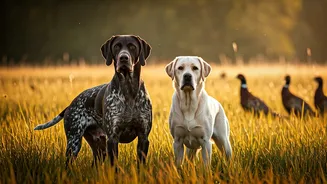
of speckles in black, orange, or liver. Edward Laverack originally developed this breed for bird hunting, and its signature move is the 'set' – a low, poised crouch when game is scented. This stance, with legs bent, head inclined, and tail steady, is a legacy from its ancient role as a net-hunting dog, signaling the hunter to deploy a net. Beyond its hunting expertise, the English Setter is a remarkably gentle and intelligent pet, known for forming strong bonds with children and embodying a true gentleman's spirit in the field.
Brittany: Agile & Affectionate
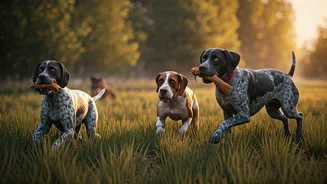
Originating from the Brittany region of France, the Brittany stands out as an exceptionally versatile hunting dog, bred since the 1800s for all-around bird hunting and more. Its robust coat, typically marked with orange and white or black and white, provides excellent protection against water and the burrs encountered in rugged environments. Equipped with long, powerful legs, this breed can achieve incredible speed, locking into a precise and unwavering point the moment it detects prey, followed by an eager retrieve using a gentle mouth. What truly sets the Brittany apart is its inherently cheerful and alert disposition, coupled with eyes that gleam with a desire to please, making it a beloved family pet that engages playfully with children and offers unwavering companionship during extended hunting expeditions.
Vizsla: The 'Velcro Dog'
Hungary's esteemed 'Velcro dog,' the Vizsla, traces its lineage back to the 14th-century Magyar tribes, specifically developed for its exceptional skills in pointing and retrieving across expansive plains. Its sleek, russet-gold coat is perfectly suited for long, rapid pursuits. Built with a lean yet muscular frame, typically standing 21-24 inches tall and weighing between 44-60 pounds, the Vizsla exhibits remarkable stamina and an innate drive to stay close to its handler, maintaining an intense focus on scent trails. After its exercise needs are met, the Vizsla transforms into a calm and affectionate companion, readily bonding with its family and demonstrating a friendly demeanor towards children.
Weimaraner's Prowess
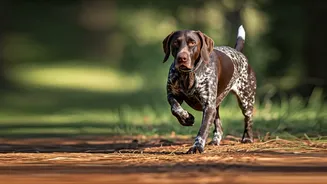
Affectionately nicknamed the 'Gray Ghost' due to its distinctive shimmering silver coat and relentless speed, the Weimaraner emerged in 1800s Germany. It was cultivated by nobility for its formidable abilities as a fearless tracker, capable of pursuing large game such as boar, bear, wolves, and deer. This breed possesses the courage, endurance, and a keenly sensitive nose essential for following blood trails over vast distances. Its short, smooth fur requires minimal grooming. A tall and athletic dog, standing between 23-27 inches and weighing 55-90 pounds, the Weimaraner covers ground with powerful strides, demonstrating unwavering bravery on scent-driven pursuits.
Ibizan Hound's Agility
Among the most ancient sighthound breeds, the Ibizan Hound's history spans over 5,000 years, with ancient Egyptian art depicting similar lean, agile hunters. Phoenician traders are believed to have introduced these dogs to Spain's Balearic Islands, including Ibiza, around 800 B.C. There, island farmers refined the breed into an exceptional 'rabbit dog.' Unlike many scent hounds, the Ibizan relies on its acute eyesight to locate prey and its remarkable speed to pursue it across challenging, rocky terrains, showcasing agility and swiftness.