






Sunrise Launch from Florida
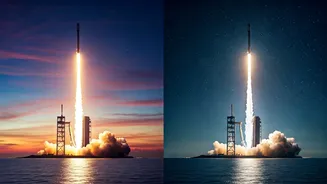
SpaceX kicked off a monumental day with an early morning launch from Florida's Cape Canaveral Space Force Station. At precisely 5:23 a.m. EDT on Tuesday,
April 14, 2026, a Falcon 9 rocket ascended from Space Launch Complex 40, carrying with it a payload of 29 Starlink satellites. These crucial components are designed to bolster the ever-expanding low Earth orbit constellation, providing broadband internet services. This launch marked an early morning triumph, setting the stage for an ambitious day of space operations. Just about an hour after liftoff, the upper stage of the Falcon 9 successfully deployed its precious cargo, ensuring the satellites were on the correct trajectory to integrate into the growing Starlink network. The first stage booster, B1080, also performed admirably, returning to Earth for a pinpoint landing on the "Just Read the Instructions" droneship positioned in the Atlantic Ocean, marking its 26th successful flight.
Sunset Lift-off from California
Later that same day, approximately 19 hours after the Florida launch, SpaceX demonstrated its operational reach by launching another batch of Starlink satellites from the West Coast. From Space Launch Complex 4 East at Vandenberg Space Force Base in southern California, a Falcon 9 rocket lifted off at 9:29 p.m. PDT (which was 12:29 a.m. EDT on April 15). This mission deployed an additional 25 Starlink satellites into space, further enhancing the global internet constellation. Similar to its East Coast counterpart, the rocket's upper stage performed its duty flawlessly, releasing the satellites into their designated orbits about an hour post-launch. The first stage booster, identified as B1082, also completed its mission by touching down on the "Of Course I Still Love You" droneship in the Pacific Ocean. This landing signified the 21st reuse of this particular booster, highlighting the company's commitment to reusability and efficient spaceflight operations. Together, these two launches underscored SpaceX's capability to execute complex, multi-coastal missions within a short timeframe.
Constellation Milestone
Following this impressive "doubleheader" of launches, SpaceX's Starlink network reached a significant milestone, surpassing an astounding total of over 10,200 satellites. This substantial number represents a massive undertaking in establishing a low Earth orbit constellation capable of providing widespread internet access. The Vandenberg launch, in particular, was noteworthy as it contributed to SpaceX's overall launch cadence for the year. This particular launch was SpaceX's 46th mission of 2026, out of a cumulative 629 Falcon 9 missions conducted since the program's inception in 2010. The successful deployment of these numerous satellites from two different locations on the same day exemplifies the company's advanced logistical capabilities and its relentless drive to expand its satellite internet service globally, demonstrating a powerful combination of engineering prowess and operational efficiency in the pursuit of connecting the unconnected.