






A Farmer's Ingenuity
Hailing from Girdharpura village near Kota in Rajasthan, Shri Kishan Suman, a farmer in his early fifties, embarked on a journey of horticultural innovation.
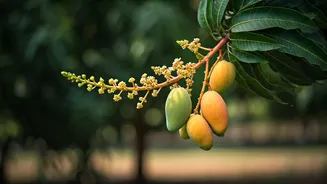
Initially cultivating staple crops like rice and wheat, fluctuating market prices prompted a shift in his agricultural pursuits. In 1995, he ventured into floriculture, successfully growing roses, mogra, and thuja. This experience with plant manipulation, notably creating rose plants with multiple colors on a single stem, sparked a new ambition: to revolutionize mango cultivation. Drawing inspiration from his success with flowers, Suman began experimenting with mangoes, acquiring stones from various varieties and meticulously nurturing them. His dedication led him to graft saplings onto rootstock, eventually discovering a unique tree that exhibited the rare trait of flowering three times a year, during January-February, June-July, and September-October.
Birth of Sadabahar
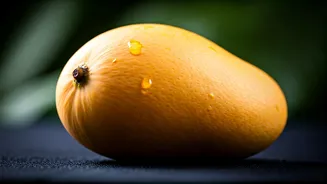
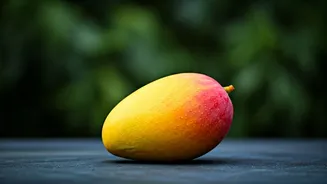
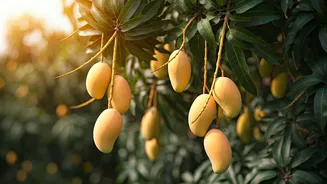
Around the year 2000, Shri Kishan Suman successfully cultivated this extraordinary tree into what he named 'Sadabahar'. This dwarf variety of mango boasts characteristics remarkably similar to the renowned Alphonso, offering a comparable sweet taste, a smooth, fiber-free texture, and an appealing saffron-orange hue. Its table quality surpasses that of other multi-fruiting varieties like Baramasi or Dofasla, setting it apart as a truly exceptional fruit. The breakthrough gained attention through the Honey Bee Network volunteer Sundaram Verma, leading to its evaluation by the National Innovation Foundation (NIF). Following NIF's directive to withhold sapling distribution for over a decade to allow for rigorous nationwide testing, Suman patiently awaited official validation. By 2012, gifted plants began yielding fruit on Kamal Hissaria's farm near Kota, a testament to Sadabahar's consistent productivity and remarkable traits.
National Recognition
Shri Kishan Suman's pioneering efforts with the Sadabahar mango have earned him significant national acclaim. In March 2017, his achievements were recognized with the prestigious Farm Innovation Award presented at Rashtrapati Bhavan during the 9th Biennial Grassroots event hosted by the National Innovation Foundation. This recognition further cemented the importance of his work. The Sadabahar mango has also found a place in the gardens of Rashtrapati Bhavan, now growing in Amrit Udyan. Furthermore, his unique variety has been officially registered under the Protection of Plant Varieties and Farmers’ Rights Act, a crucial step in safeguarding his intellectual property and acknowledging his contribution to agricultural diversity. While mango trees typically require approximately five years to bear fruit, the exceptional qualities of Sadabahar make the wait, and the innovation behind it, unequivocally worthwhile for growers and fruit enthusiasts alike.